




Rajasthan's Regal Aad
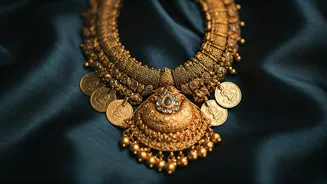
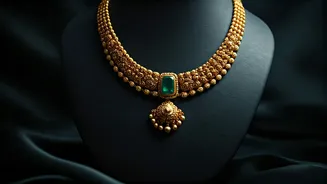
Rajasthan, a land synonymous with grandeur, boasts the magnificent 'aad' necklace. This traditional adornment, primarily crafted in gold, features a striking
square-shaped pendant. The intricate Kundan work, a hallmark of Rajasthani craftsmanship, elevates its aesthetic, often seen layered with the voluminous 'raani haar' (queen's necklace). This pairing is not merely for decoration but a symbolic representation of royalty and heritage, deeply interwoven with the state's cultural fabric and celebratory occasions.
A Tapestry of Tradition
India's jewellery artistry mirrors its vast linguistic and sartorial diversity. Each state proudly preserves its distinct style, from the elaborate temple jewellery of the South to the rustic silver pieces found in the West. This article highlights a few of these captivating traditional necklace designs, each carrying its own historical narrative and cultural resonance, offering a glimpse into the nation's profound artistic legacy.
Bridal Elegance in Maharashtra
In Maharashtra, the 'Thushi' necklace graces the necks of brides, embodying a cherished bridal tradition. This exquisite piece is characterized by its closely strung gold beads, forming a short choker that can be adjusted with a delicate thread. Its popularity within Marathi bridal jewellery signifies not just adornment but also a deep-seated cultural connection, often passed down through generations and symbolizing marital blessings.
Karnataka's Royal Chokers
Karnataka showcases a penchant for striking choker-style necklaces, particularly favoured by brides. These pieces are often embellished with vibrant red and green stones, adding a touch of opulence. Historically associated with the Mysore royal court, these chokers have cemented their place as a significant element of South Indian bridal culture, reflecting a legacy of regal adornment and ceremonial importance.
Temple Jewellery's Divine Charm
The allure of temple-inspired jewellery is particularly strong in certain regions, drawing heavily from architectural motifs. These pieces typically feature intricate designs showcasing deities, most notably Goddess Lakshmi, the embodiment of prosperity. Exquisitely crafted in gold and adorned with precious ruby and emerald stones, this style of jewellery is revered for its spiritual significance and artistic beauty.
Punjab's Majestic Guluband
Punjabi brides often exude regal charm with the 'guluband', a traditional short choker necklace. Fashioned from pure gold, these pieces are celebrated for their incredibly intricate filigree work, which creates a majestic and awe-inspiring appearance. The 'guluband' is a testament to the meticulous artistry and sophisticated design sensibilities prevalent in Punjabi cultural adornments.
Kerala's Prosperous Kasu Mala
In Kerala, the 'Kasu Mala' reigns supreme as the quintessential bridal necklace for Malayali women. This elegant gold necklace is adorned with numerous small coins, each intricately engraved. Revered as a traditional wedding gift, the 'Kasu Mala' is a powerful symbol of wealth and prosperity, reflecting the cultural values and auspiciousness associated with marital unions.
Himachal's Moonlit Hansli
The tribal communities of Himachal Pradesh predominantly favour the 'hansli', a substantial silver choker. Its distinctive crescent shape is elegantly designed, drawing inspiration from the celestial moon. This particular style is also known by the name 'Chandrahaar', further emphasizing its lunar motif and the deep-rooted cultural symbolism associated with it in the region.