





Nick Jonas' Sleep Stance
Celebrity Nick Jonas has stirred up a unique conversation online regarding his peculiar sleep preferences. He famously revealed on a talk show that he
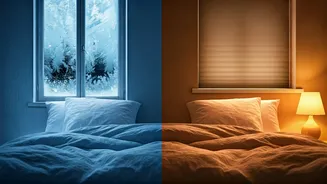
views beds solely as resting places, refraining from activities like eating or reading in them to maintain their purpose for sleep. Adding to this distinctive approach, Jonas expressed his strong aversion to warm sleeping environments, stating, "I just don't like it (the bed) to get too warm. I run hot. It's a whole thing." This personal quirk was further highlighted during an interview on the podcast 'Therapuss,' where he enthusiastically agreed with the host's preference for a significantly cooler room, around 62°F (16.7°C), expressing a desire to achieve such frigid conditions himself, noting, "62 is very cold, I love that. How does the thermostat even get that low? I need that in my life." This stark contrast to his wife's preference for warmer temperatures, around 71-72°F (21.7-22.2°C), illustrates a common household dilemma where differing sleep needs can lead to negotiation.
The Science of Sleep Temperature
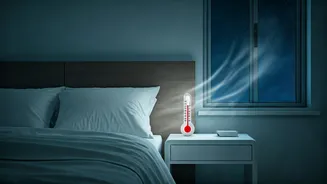
The ambient temperature of your bedroom plays a surprisingly crucial role in the quality and onset of sleep. Experts suggest that a cooler environment is more conducive to initiating the natural drop in core body temperature that signals the body it's time to rest. According to Dr. Yatin Sagvekar, a Consultant Neurologist at Kokilaben Dhirubhai Ambani Hospital, an optimal sleep setting is around 18°C (64.4°F). This cooler temperature assists in the body's thermoregulation process, facilitating the release of melatonin, the hormone essential for regulating sleep-wake cycles. Dr. Hiran S. Reddy, a consultant physician and diabetologist from Gleneagles Hospital, Hyderabad, elaborates on this natural mechanism. He explains that our bodies possess an intricate system of thermoregulation to maintain a stable internal temperature. For individuals who tend to feel warmer, such as Nick Jonas, a common coping mechanism is to allow a foot to hang out from under the covers. This seemingly simple action is quite effective because the soles of the feet are rich in blood vessels and have minimal hair, making them ideal for heat exchange. By exposing one foot, excess body heat can dissipate more readily through these vessels, contributing to a slight reduction in core body temperature, which in turn promotes sleep. This minor cooling sensation can also send a calming signal to the brain, aligning with our circadian rhythms and further encouraging melatonin production, thus leading to faster sleep onset and more profound rest.
Optimizing Your Sleep Environment
Understanding the impact of room temperature on sleep can empower individuals to make simple adjustments for better rest, particularly for those who frequently overheat or experience night sweats. As highlighted by Dr. Hiran S. Reddy, people like Nick Jonas, who struggle with excessive body heat during sleep, can benefit greatly from natural, non-invasive strategies. The simple act of letting a foot extend beyond the duvet is a prime example of such a tactic. This method leverages the efficient heat-dissipating properties of the feet, which possess a high concentration of blood vessels and minimal insulation, allowing excess body heat to escape more easily. This process aids in lowering the body's core temperature, a critical factor in initiating and maintaining sleep. Furthermore, research in sleep medicine indicates that even minor cooling of the skin can significantly accelerate the time it takes to fall asleep and contribute to deeper, more restorative sleep. Therefore, instead of relying on medication, individuals can adopt practical behavioral changes, such as managing their bedroom's thermal environment, to improve their overall sleep hygiene and combat issues like night sweats or a general feeling of being too warm, ultimately leading to a more restful night.