
Life-Seeking Missions Intensify
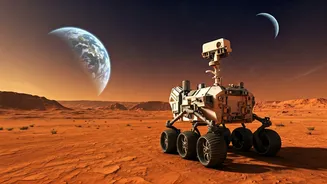
NASA is sharpening its focus on the quest to find life beyond Earth. This includes numerous projects dedicated to exploring different planets and celestial
bodies for potential habitats and biological signatures. This intensified focus represents a shift towards missions aimed at directly addressing one of humanity's biggest questions: Are we alone? The agency is investing heavily in technologies and instruments that can detect and analyze signs of life, like microbial life. This strategic shift reflects NASA's commitment to pushing the boundaries of space exploration and unlocking the secrets of the universe, with the ultimate goal of finding life beyond our planet. This includes studying exoplanets in the habitable zones of their stars and developing sophisticated probes to analyze planetary environments within our solar system.
Laser Communication Innovation
The implementation of laser-based communication marks a leap forward in how NASA transmits data from space. Unlike traditional radio systems, laser communication utilizes light beams to send data, potentially increasing bandwidth and data transfer rates significantly. This technology enables the transmission of massive amounts of scientific data, high-resolution imagery, and video in real-time. This cutting-edge technology will drastically improve communications with spacecraft, leading to faster data downloads and improved mission control capabilities. This technology will be instrumental in the success of future missions, facilitating a more streamlined exchange of information and enhancing overall operational efficiency.
Artemis II: Moon Bound
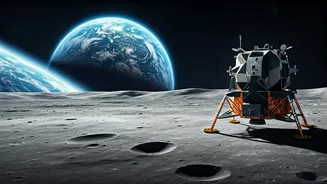
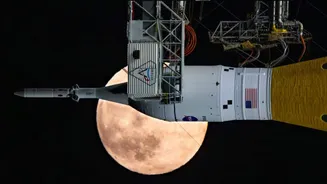
The Artemis II mission is a crucial step in NASA's ambitious program to return humans to the Moon. Following Artemis I's successful uncrewed flight around the Moon, Artemis II will carry astronauts on a lunar flyby. This mission serves as a critical test of the Orion spacecraft and the Space Launch System (SLS) rocket, paving the way for future crewed lunar landings. Artemis II represents a major milestone in returning humans to the lunar surface. The successful completion of this mission will validate the capabilities of the hardware and systems, enabling NASA to focus on the more difficult task of establishing a sustainable human presence on the Moon. This endeavor highlights NASA's unwavering dedication to the exploration of deep space.
Roman Telescope Nears Ready
The Nancy Grace Roman Space Telescope, once fully operational, is designed to revolutionize our understanding of the cosmos. During its final testing phase, the telescope is undergoing rigorous evaluations to ensure it meets the highest standards for performance and reliability. Once launched, this telescope will provide unprecedented views of the universe, helping scientists explore dark energy, dark matter, and exoplanets. The Roman Telescope is slated to become a powerful instrument for studying galaxies and the distribution of matter across vast cosmic distances. The mission aims to address some of the most fundamental questions in astrophysics and cosmology. This technology underscores NASA's commitment to cutting-edge astronomical research.