




Correct Pullover Execution
To properly perform the dumbbell pullover, lie crosswise on a flat bench, with only your upper back supported and your feet firmly planted on the floor.
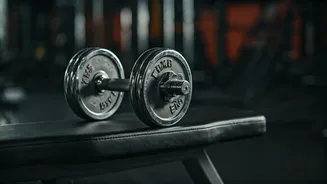
Grasp a single dumbbell with both hands, holding it vertically with your palms pressing against the underside of the top weight. Begin with the dumbbell directly above your chest, arms slightly bent but maintaining that slight bend throughout the movement. As you inhale, slowly lower the dumbbell in an arc behind your head, extending your arms and feeling a stretch across your chest and lats. Ensure your core remains engaged to stabilize your body and prevent your lower back from arching excessively. Focus on a controlled descent, avoiding any sudden drops. Once you've reached a comfortable point of stretch without discomfort, exhale as you powerfully pull the dumbbell back to the starting position above your chest, squeezing your chest and lat muscles at the peak of the contraction. The movement should be fluid and deliberate, emphasizing muscle engagement over momentum.
Key Workout Benefits
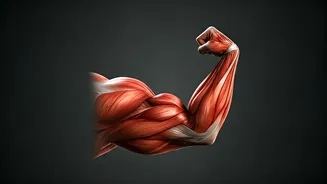
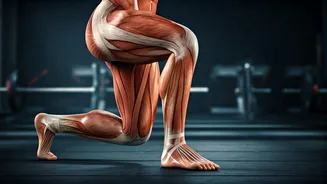
The dumbbell pullover offers a unique and comprehensive benefit for upper body development, primarily targeting the pectoralis major (chest muscles) and the latissimus dorsi (back muscles). By performing this exercise, you engage both pushing and pulling muscles simultaneously in a controlled manner, which can lead to a more balanced and complete upper body physique. Beyond muscle growth, it also significantly enhances chest expansion and can improve rib cage mobility, contributing to better breathing mechanics and a potentially larger lung capacity over time. This exercise can also engage the serratus anterior muscles, which play a crucial role in shoulder blade stability and overall shoulder health. Furthermore, it works the triceps as secondary movers, adding an element of arm development. The pullover's ability to stretch the chest and lats, while simultaneously strengthening them, makes it a valuable addition for athletes seeking improved posture and functional strength.
Effective Exercise Variations
To keep challenging your muscles and introduce new stimuli, several dumbbell pullover variations can be incorporated into your routine. One common modification involves using two lighter dumbbells instead of one, held with palms facing each other, which can alter the resistance profile and hand placement. For a greater emphasis on the lats, try performing the pullover with a slight bend in your elbows, focusing on pulling the weight down and back with your back muscles. Conversely, for a more pronounced chest stretch, a straighter arm variation can be used, provided your shoulder joints are healthy and can tolerate the increased range of motion. Another approach is to elevate your hips slightly off the bench, creating a different angle of pull and demanding more core stability. You can also experiment with performing the pullover on an incline or decline bench to further target specific areas of the chest and lats, adjusting the angle to maximize muscle activation and engagement throughout the movement's arc.