






Decoding Soup Labels
Canned soup's convenience is undeniable, but its high sodium content can be a concern for blood pressure management. Dietitians advise scrutinizing labels,
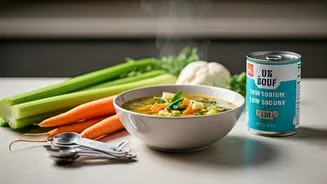
not just for 'low sodium' claims, but for actual sodium per serving and the number of servings per can. The recommended daily sodium intake for adults is 2,300 mg, with a tighter goal of 1,500 mg for individuals with hypertension. A single cup of soup can easily contain 700-800 mg of sodium, and with most cans having two servings, consuming an entire can could meet or exceed the 1,500 mg daily limit. Opt for soups with 400 mg of sodium or less per serving. Be wary of 'reduced sodium' labels, which only indicate a 25% reduction; 'low sodium' (140 mg or less per serving) and 'very low sodium' (35 mg or less per serving) are more reliable indicators of a healthier choice. Remember that various ingredient forms like MSG, sodium bicarbonate, and sodium citrate also contribute to the sodium count, so always check the ingredient list for anything containing 'sodium.'
Vegetable Powerhouses
To combat high blood pressure, embrace soups rich in vegetables, as they are natural sources of potassium. This essential mineral helps to offset the effects of sodium by supporting healthy blood vessel function and aiding the kidneys in excreting excess sodium. Look for broth-based vegetable soups featuring ingredients like tomatoes, carrots, zucchini, cabbage, and kale, which are packed with potassium. Furthermore, bean and lentil soups are excellent choices due to their high fiber content, a nutrient known to contribute to lower blood pressure. Prioritize soups where vegetables are prominent in the ingredient list, rather than just a minor addition. A vibrant mix of colors—greens, reds, and oranges—often signifies a broader spectrum of nutrients, antioxidants, and fiber.
Lean Protein & Fiber
Selecting soups that offer a good source of protein and fiber is crucial for maintaining satiety and stabilizing blood sugar levels, both of which indirectly benefit heart health. Legumes such as beans, lentils, and peas are particularly beneficial as they provide a trifecta of protein, fiber, potassium, and magnesium. When choosing soups with animal protein, lean options like chicken, turkey, or seafood are preferable over processed meats like sausage or bacon, which can significantly elevate sodium content. Aim for soups containing at least 3 grams of fiber per serving, especially those where vegetables or legumes are the primary ingredients. Adequate fiber intake supports cardiovascular function, aids digestion, and promotes a feeling of fullness, making your meal more satisfying.
Avoiding Creamy Pitfalls
While creamy soups can be appealing, dietitians generally recommend opting for broth-based varieties over cream-based ones. This preference stems from the fact that creamy soups are often higher in saturated fat, which can put additional strain on your arteries and negatively impact overall heart health. Ingredients like heavy cream, cheese, butter, and coconut milk, while adding richness, are best consumed in moderation for those focused on cardiovascular well-being. Additionally, be mindful of flavor enhancers like monosodium glutamate (MSG), yeast extract, and hydrolyzed vegetable protein, as these can also contribute to the overall sodium content. Soups seasoned with herbs, spices, garlic, onion, and pepper offer robust flavor without relying heavily on salt.
Boosting Nutrition
Even a carefully selected low-sodium canned soup can be enhanced for a more nutritious meal. Think of soup as a foundation that can be elevated with the addition of other wholesome ingredients. Pairing your soup with whole-grain bread, crackers, or a small roll increases fiber intake and transforms a lighter meal into a more substantial one. Incorporating frozen vegetables like spinach, peas, or broccoli directly into the soup as it heats is a simple yet effective way to add fiber, potassium, and volume without increasing sodium. Fresh or dried herbs can significantly boost flavor and texture; consider salt-free seasoning blends available in stores. Serving your soup with a side salad dressed with olive oil and vinegar adds healthy fats and more vegetables. A dollop of plain Greek yogurt can lend creaminess, flavor, and calcium, which plays a role in blood pressure regulation. If a soup's sodium content is slightly higher than desired, diluting it with water or low-sodium broth can reduce its concentration and extend the serving size.