







High-Volume Identification Made Simple
Microbiology labs are under immense pressure to deliver swift and precise diagnostic outcomes, especially with rising cases of hospital-associated infections
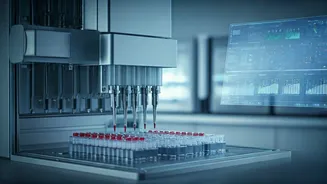
and drug-resistant microbes. Traditional methods often involve extensive, time-consuming steps. However, advanced proteomic fingerprinting techniques offer a significant leap forward. By analyzing the unique protein signature of microorganisms like bacteria, yeasts, and fungi, these systems can rapidly identify them by comparing against vast, continuously updated databases. This approach allows for the processing of up to 600 isolates per hour, dramatically simplifying test menus and reducing the need for multiple organism-specific assays. The benefits extend beyond speed; by minimizing ambiguous results and the necessity for retesting, this technology not only accelerates turnaround times but also leads to a substantial reduction in consumable usage and laboratory waste, contributing to cost savings and environmental sustainability. Furthermore, these versatile platforms support specialized applications, such as detecting specific resistance mechanisms and enhancing the identification of particularly challenging organisms.
Pinpointing Difficult Pathogens
Accurate identification of challenging microbes, particularly mycobacteria, is crucial for effective patient care, infection control, and public health surveillance. Misidentifying these organisms can lead to inappropriate or prolonged treatment, or delayed recognition of outbreaks. Specialized solutions are designed to provide precise species-level identification, even from difficult sample types like liquid or solid culture media. These systems utilize dedicated reference libraries that encompass a broad range of known mycobacterial species, ensuring definitive answers. The advantage lies in their integration with broader laboratory platforms, allowing for the streamlined management of bacterial, fungal, and mycobacterial workflows within a single system. This consolidation saves valuable laboratory space, conserves resources, and reduces the training burden on staff. For situations requiring deeper insights into resistance patterns, targeted molecular assays are also available, enabling the simultaneous detection of key drug resistance mutations alongside pathogen identification, thereby supporting timely and informed therapeutic decisions.
Smarter Antimicrobial Choices
Determining the precise antimicrobial susceptibility of pathogens is fundamental for guiding effective treatment strategies. Advanced methods provide accurate minimum inhibitory concentration (MIC) values for a wide spectrum of agents, including complex antifungals and multidrug-resistant bacteria. This precision empowers clinicians to select tailored therapies, preventing both under-treatment, which can lead to prolonged illness, and over-treatment, which contributes to antimicrobial resistance and increased healthcare costs. These systems are engineered for reliability and ease of use, minimizing the reliance on less precise in-house methods or external reference testing, which streamlines laboratory operations without compromising accuracy. Practical benefits include room temperature storage and extended shelf lives for testing consumables, which not only simplifies logistics but also reduces waste and enhances cost-effectiveness. Complementary pre-analytical processing tools, such as integrated cytocentrifuges and slide stainers, further enhance workflow efficiency by combining sample preparation steps into a single, compact instrument, improving consistency, reducing contamination risks, and speeding up the overall diagnostic pipeline.
Real-Time Strain Discrimination
Identifying the precise strain of a pathogen in real-time is critical for managing outbreaks and implementing timely infection control measures. While traditional genetic profiling methods offer high resolution, they are often too slow for immediate clinical decision-making. A key innovation in this area utilizes Fourier Transform Infrared (FTIR) spectroscopy to generate rapid, highly reproducible strain-level fingerprints. This technology can process batches of isolates in a matter of hours, providing actionable data on the same day and enabling prompt investigation of potential transmission clusters. Studies have validated these results against more complex molecular typing techniques for significant pathogens. The ability to quickly confirm or rule out relatedness among isolates allows infection control teams to implement barrier precautions more swiftly, optimize patient bed management, and avoid the expense of unnecessary whole-genome sequencing. This accelerates the response to potential outbreaks, safeguarding patient safety and resource utilization.
Streamlined Genomic Insights
In certain complex scenarios, particularly during outbreak investigations or when analyzing antimicrobial resistance, a deeper understanding at the genomic level is required beyond traditional culture-based techniques. User-friendly software platforms are emerging to simplify the analysis of next-generation sequencing (NGS) data. These intuitive tools streamline the interpretation of intricate sequencing datasets, enabling confident identification of outbreak origins and resistance mechanisms without necessitating specialized bioinformatics expertise. By integrating various advanced tools – from sample preparation and rapid identification to precise susceptibility testing, real-time strain typing, and sophisticated NGS data analysis – laboratories can extract maximum valuable information from each sample. This comprehensive, end-to-end approach facilitates rapid identification, immediate strain differentiation, and in-depth genomic investigations, all within a cohesive ecosystem that enhances diagnostic speed while effectively managing costs. Additionally, automated sample-to-answer systems are further transforming molecular diagnostics, integrating multiple steps into single, high-throughput platforms that deliver results in hours.