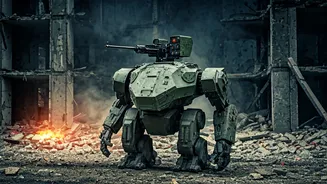








The Robotic Defender
The narrative begins with a bold claim: a single robot, equipped with weaponry, engaged Russian forces in combat for an astonishing 45 days. This detail
immediately captures attention, highlighting the potential for advanced robotics in active war zones. The reports don’t provide precise technical specifications of the robot, but the mere fact of its prolonged resistance indicates considerable autonomy, resilience, and operational endurance. The role of robots in conflict is still in its infancy, and this account, if accurate, could alter how experts assess the possibilities and dangers of deploying autonomous systems on the battlefield. The situation creates new questions about the strategies and the types of situations that robots are best suited for, and ethical concerns associated with such deployments that are being explored by both military strategists and lawmakers. The story, if accurate, is a pivotal example of how robots are rapidly changing the face of warfare.
Sustained Resistance Tactics
The remarkable feat of fighting for 45 consecutive days requires further examination. The robot's capacity to maintain continuous combat operations raises crucial questions about its operational strategies. It suggests the machine possessed significant tactical and strategic capabilities. The specifics of its offensive maneuvers, defensive formations, and methods to withstand attacks are details that are currently unspecified. How was the robot resupplied with ammunition and other essentials? Did it have a degree of self-repair capability, or was it supported remotely? Answers to these questions are essential in fully assessing its long-term viability. Analyzing the tactics deployed by the robot could offer valuable lessons regarding the utilization of artificial intelligence in conflict situations and the development of future robotic weapon systems. The reported longevity of the robot's operations might indicate advanced energy management systems, robust hardware design, and sophisticated programming. All these factors would have contributed to its ability to survive for such a prolonged period.
Technological Implications
This narrative offers a glimpse into the future of warfare, highlighting the increasing role of autonomous systems. If confirmed, this incident underscores the potential for robotic systems to be crucial assets in combat scenarios. It could fuel further investment in research and development, creating more versatile and robust war-fighting robots. This instance serves as a case study for future development and deployment, which could include improvements in aspects like target acquisition, decision-making algorithms, and battlefield adaptation. The increasing use of autonomous systems also raises ethical and strategic issues that need to be addressed at the national and international levels. Discussions regarding the control and use of these systems are critical, and will likely influence military doctrines and international regulations in the near future, creating a challenging field of legal and ethical debate.