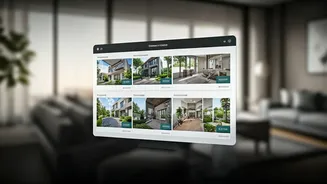






Define Your Needs
Before diving into online listings, it's crucial to establish a clear set of criteria for your ideal property. This involves identifying the specific city
and preferred localities, along with a realistic budget range, encompassing both minimum and maximum price points. Furthermore, determine the property type you're looking for, whether it's an apartment, a plot of land, or an independent house. Consider the desired size, specified by BHK (Bedroom, Hall, Kitchen) or the built-up area. Finally, list essential amenities that are non-negotiable, such as parking facilities, a lift, robust security systems, or proximity to a park. Having these requirements documented beforehand will streamline your search and prevent you from being swayed by unsuitable options, making your online property hunt significantly more efficient and targeted.
Master Online Filters
Online property portals offer powerful filtering tools that are essential for an effective search. Utilize these features meticulously by first selecting your desired location and micro-locations, focusing on areas close to your workplace, educational institutions, or family. Set a practical budget filter to maintain realistic expectations. Specify the property type and size, such as 2 BHK or 3 BHK flats, or plots, to eliminate irrelevant results. Decide whether you're interested in ready-to-move properties or those under construction. Finally, choose your preferred ownership model (owner or broker) and furnishing status (furnished, semi-furnished, or unfurnished). Employing these filters wisely is the cornerstone of efficiently shortlisting properties online, ensuring you only see listings that genuinely align with your predefined needs and preferences.
Inspect Listings Deeply
Once your filters yield results, it’s time to scrutinize each listing with a discerning eye. Examine the photos closely, favouring genuine images over 3D renderings, and assess natural light, room dimensions, and overall maintenance. Read the description thoroughly, paying attention to the building's age, floor number, and orientation. Be vigilant for any mention of extra charges or specific conditions. Review the floor plan to understand room shapes, toilet placement, and ventilation. Mentally calculate the price per square foot and compare it with other listings in the vicinity. This detailed inspection process, akin to a detective's work, helps you glean crucial information and make informed preliminary judgments about each property's suitability before committing to a visit.
Assess Locality Details
Beyond the property itself, understanding its surroundings is paramount. Leverage tools like Google Maps and dedicated locality sections on property portals to assess critical factors. Evaluate the distance to your workplace and other frequently visited places. Check the accessibility of public transportation, including the nearest metro stations and bus stops. Determine the proximity to essential services like schools, hospitals, markets, and parks. Investigate traffic patterns during peak hours to gauge commute times. Additionally, use street view features to get a real-time sense of the neighbourhood and identify any potentially disruptive elements like railway tracks, busy bars, or industrial zones nearby. This comprehensive locality check ensures that a property’s internal appeal isn't undermined by external disadvantages.
Verify Project and Reputation
Before shortlisting, it's vital to investigate the credibility of the developer for new projects and the reputation of the society for resale properties. For builder projects, explore the official website, review past projects, delivery records, and customer feedback. Conduct online searches for the project name combined with 'review' or 'complaint', and read discussions on forums, noting both positive and negative sentiments. Crucially, verify RERA registration on your state's RERA website for confirmation and status. For resale properties, search the society name to uncover any recurring maintenance issues, water supply problems, or safety concerns mentioned in online communities. While a perfect record isn't expected, widespread negative feedback serves as a significant warning sign.
Create a Scoring System
To effectively narrow down your options, implementing a simple scoring sheet is highly recommended. Create a spreadsheet or document listing your shortlisted properties, including details like the property ID or link, area and society name, asking price, carpet or built-up area, distance to your office, building age, and key pros and cons. Assign a score out of 10 or 100 to each property based on factors such as location desirability, price competitiveness, interior layout, available amenities, and your initial impression from photos and reviews. Sorting these properties by their scores will help you objectively identify the top 5-8 contenders for physical visits, maintaining focus and minimizing confusion throughout the decision-making process.
Engage Before Visiting
Prior to scheduling any physical site visits, initiate contact with the agent or owner listed in the property advertisement. This preliminary conversation can help eliminate several more options even before you leave your home. Prepare a list of essential questions, including inquiries about price negotiability and the expected range, any significant property issues, the precise carpet area, and details regarding monthly maintenance charges and property taxes. For resale properties, it’s important to ask the owner their reason for selling. The clarity and honesty of the responses will provide valuable insights and help you further refine your shortlist based on practical considerations.
Prioritize Your Visits
Not every property that appears promising online warrants a physical visit. Prioritize listings that align closely with your needs, ideally matching 80-90% of your criteria, and fall within your budget with only minor negotiation potential. Give preference to properties with clear, detailed photos and readily available documentation. Start your physical visits with a focused group of 3-5 properties on the first day. Carry your notes from the online search phase to effectively compare the online presentation against the on-site reality. After each visit, update your scoring sheet with actual pros and cons, your intuitive feel for the home and neighbourhood, and any revised negotiation room based on your interaction with the seller or agent.