






Edge Computing Takes Flight
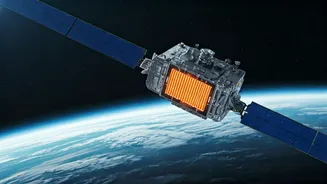
A groundbreaking alliance is set to redefine the landscape of in-orbit data processing. By late 2026, edge computing nodes will begin deployment on the satellites
of a leading communications provider, marking a significant step forward in space-based technology. This initiative is designed to showcase innovative Orbital Data Center software, enabling distributed and highly resilient computational infrastructure among the stars. The core idea is to bring sophisticated processing capabilities closer to the data source in space, minimizing latency and enhancing operational flexibility. This move is driven by the vision of making modular, low-latency computing a reality in orbit, with a strong focus on demonstrating practical, real-world applications. The collaboration aims to validate both hardware and software integration in the challenging environment of space, paving the way for new possibilities in distributed computing systems built to withstand the rigors of orbit.
Optical Links: The Data Superhighway
The success of this ambitious orbital computing project hinges on an advanced optical data relay network. This network acts as a high-speed, superhighway for data transmission, connecting the distributed compute nodes across multiple satellites. By employing optical communication, the system achieves significantly faster data transfer rates compared to traditional methods, which is crucial for processing large volumes of information generated in space. This technology is fundamental to enabling a resilient compute infrastructure, ensuring that data can flow efficiently even if individual nodes or links experience issues. The partnership's reliance on this optical network underscores its commitment to building a robust and scalable system capable of managing high-volume workloads across a constellation of spacecraft. It's a critical component in achieving the goal of multi-tenant, enterprise-grade computing operations in the harsh environment of space, promising enhanced capabilities for a range of demanding applications.
Revolutionary Space Applications
The convergence of orbital computing and advanced optical networks unlocks a wealth of transformative applications. Imagine the potential for ultra-high-resolution global weather forecasting, providing unprecedented accuracy and detail to predict atmospheric conditions. This capability could revolutionize disaster management, agricultural planning, and climate research. Furthermore, the enhanced data processing power in orbit is a game-changer for intelligence, surveillance, and reconnaissance missions. It enables near real-time analysis of vast amounts of imagery and sensor data, providing critical insights for national security and situational awareness. The technology also significantly bolsters space domain awareness, allowing for more effective tracking and monitoring of objects in orbit, thereby mitigating collision risks and enhancing space traffic management. This strategic collaboration is not just about technological advancement; it's about opening doors to a new era of intelligent space operations.