









India's Growing Obesity Crisis
India is grappling with a significant increase in obesity across all age groups, with children and adolescents being particularly affected. Recent data
indicates India holds the second-highest number of children globally living with overweight and obesity, totaling approximately 41 million among those aged 5-19. This early onset of obesity is a major concern, as it drastically elevates the risk of developing chronic conditions like diabetes, high blood pressure, and heart disease much earlier in life – ailments traditionally associated with older adults. The drivers behind this alarming trend are multifaceted, stemming from a diet high in calorie-dense, processed foods, a decline in physical activity due to sedentary lifestyles and increased screen time, irregular sleep and eating habits, and stress-induced food-seeking behaviors. These factors collectively contribute to hormonal imbalances and accelerated fat storage from a young age. Adolescence, in particular, acts as a 'metabolic amplifier,' where hormonal shifts can exacerbate insulin resistance and fat accumulation if lifestyle choices are suboptimal, strongly linking childhood weight gain to future cardiometabolic diseases. Conversely, maintaining a healthy weight throughout school years significantly lowers the lifetime risk of developing diabetes, hypertension, and heart issues.
The Silent Beginnings of Heart Disease
Contrary to common belief, heart disease often originates not in the heart itself, but from metabolic disturbances that can begin years, even decades, prior. The accumulation of excess body fat, especially around the abdominal area (visceral fat), initiates a cascade of detrimental physiological processes. These include the development of insulin resistance, chronic low-grade inflammation, elevated cholesterol levels, and a rise in blood pressure. Over extended periods, these metabolic derangements progressively damage the arterial walls, paving the way for the buildup of fatty deposits, a condition known as atherosclerosis. Medical research highlights that these fatty streaks can silently appear in the arteries during childhood or early adulthood. An ongoing intake of excessive simple sugars and fats, coupled with obesity, high blood pressure, and lifestyle factors like smoking, transforms these initial streaks into dangerous, cholesterol-rich plaques. This atherosclerotic process is significantly accelerated and becomes more volatile in individuals with obesity, meaning the heart attack experienced in one's 30s or 40s is often the culmination of a process that has been developing undetected for many years, possibly since their school or college days. Studies consistently show that being overweight or obese markedly escalates cardiovascular risk, multiplying the likelihood of heart disease due to the strain placed on the heart from high blood pressure, unhealthy cholesterol profiles, and overall metabolic stress.
The Interconnected Cardiometabolic Triangle
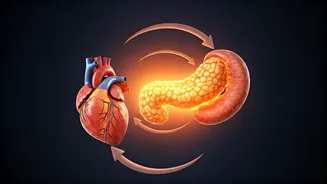
Medical professionals often describe the relationship between obesity, diabetes, and heart disease as a 'cardiometabolic triangle,' emphasizing how each condition fuels the others, creating a dangerous synergy. The progression typically begins with excess body fat, particularly visceral fat, leading to insulin resistance. This means the body's cells become less responsive to insulin, impairing its ability to regulate blood sugar effectively. Over time, this resistance can progress to prediabetes and eventually Type 2 diabetes. Once Type 2 diabetes is established, the risk to the cardiovascular system escalates dramatically. Individuals with diabetes are significantly more prone – two to four times more likely – to develop coronary artery disease or heart failure compared to those without the condition. This is why many experts view obesity as the initiating factor, diabetes as the critical accelerator, and heart disease as the frequent, and often severe, outcome of this interconnected cycle. Dr. Gondaliya explains that the insulin resistance triggered by abdominal obesity not only elevates blood sugar but also contributes to higher blood pressure, adversely affects cholesterol levels, and promotes subtle inflammation within blood vessels. These combined effects create an environment where blockages in the arteries supplying the heart, brain, and kidneys can develop more rapidly, underscoring obesity's role as the primary driver, diabetes as a key metabolic complication, and heart disease as the ultimate manifestation.
Obesity: A Heart Attack Catalyst in India
India exhibits a distinct vulnerability to metabolic disorders, with research indicating that South Asian populations tend to accumulate higher percentages of body fat and abdominal fat, even at lower overall body weights. This characteristic increases their predisposition to both diabetes and heart disease. The rapid pace of urbanization and associated lifestyle shifts have exacerbated this situation, creating what experts term a 'metabolic storm.' Sedentary work environments, a marked decrease in physical activity, and the ubiquitous availability of calorie-dense, convenient foods have collectively contributed to this escalating health crisis. Obesity plays a pivotal role in the high incidence of heart attacks observed in India because it acts as a catalyst for a cluster of metabolic problems. These include the onset of diabetes, the development of high blood pressure, and the emergence of abnormal cholesterol levels. These co-existing conditions synergistically accelerate atherosclerosis, the process by which fatty deposits build up within the arteries that supply blood to the heart. The tendency for Indians to store more visceral fat, even at lower body mass indices, poses a particularly significant threat to heart health. This inherent metabolic susceptibility means that obesity often serves as the crucial starting point in a cascade of events that ultimately leads to coronary artery disease and premature heart attacks. Heart disease has regrettably become a leading cause of mortality in India, accounting for a substantial portion of global heart attack deaths. Statistics reveal that eastern India bears a disproportionately high burden of cardiovascular disease deaths, with a significant percentage of adults affected. West Bengal, specifically, shows a higher prevalence of ischemic heart disease compared to the national average.
Drivers of Youth Obesity
A significant proportion of young adults in India, approximately one-fourth of women and over one-fifth of men aged 18-49, are currently overweight or obese. This issue is particularly pronounced in urban areas, where the rates are up to three times higher than in rural regions. The primary catalysts for this trend include increasingly sedentary lifestyles, shifts towards less healthy dietary patterns, and high-stress work environments, all contributing to a surge in non-communicable diseases among younger demographics. Studies consistently reveal that a substantial number of adolescents are not meeting the recommended daily physical activity guidelines. Simultaneously, dietary habits are undergoing a rapid transformation, with ultra-processed foods, sugary beverages, and high-calorie snacks increasingly displacing traditional meals. Globally, experts point to the widespread availability of inexpensive, energy-dense foods as a major factor driving the obesity epidemic. Another significant contributor is the pervasive increase in screen time. Prolonged hours spent engaging with smartphones, video games, and streaming services have led to a reduction in active play among children. Data indicates that the average daily screen time for Indians has risen, highlighting a growing sedentary habit that displame physical exertion.
Revisiting the Indian Diet
The traditional Indian diet, characteristically rich in lentils, diverse vegetables, whole grains, and aromatic spices, is not inherently detrimental to health. In fact, many nutritionists consider it a well-balanced and heart-friendly eating pattern. The concern arises not from the traditional diet itself, but from the modern adaptations and deviations from these established healthy practices. Experts clarify that the traditional Indian diet, with its emphasis on whole grains, pulses, vegetables, and beneficial spices, is fundamentally sound. The issue emerges with contemporary dietary shifts that incorporate excessive refined carbohydrates, frequently fried foods, abundant sugary beverages, and significantly larger portion sizes. When these dietary changes are combined with a sedentary lifestyle, the result is an increase in calorie intake without a corresponding rise in energy expenditure. Furthermore, the urban lifestyle has led to a decline in home-cooked meals, increasing reliance on processed and convenient food options. Therefore, it is not the intrinsic nature of the Indian diet but rather the departure from traditional, balanced eating habits, coupled with lifestyle changes, that contributes to the prevalence of obesity.
The Role of Age in Disease Onset
While age is a factor, its influence on the onset of these diseases is evolving. Previously, conditions associated with obesity, such as diabetes and heart disease, were typically observed in individuals over the age of 40. However, current medical observations reveal a concerning trend, with Type 2 diabetes and heart disease now being diagnosed in people as young as their 20s and 30s. Childhood obesity is particularly alarming because it subjects the developing body to prolonged metabolic stress. Children who are obese are at a considerably higher risk of remaining obese into adulthood, which significantly elevates their lifetime risk of developing diabetes and heart disease. The positive news, however, is that childhood obesity is largely a preventable condition. Establishing healthy lifestyle habits from an early age is paramount. Parents play a critical role by encouraging regular physical activity, ideally at least one hour of outdoor play daily for children. Limiting screen time and ensuring adequate sleep are equally vital components of a healthy upbringing. Meals should be balanced, providing sufficient protein, fruits, vegetables, and whole grains, while processed snacks, sugary drinks, and fast food should be minimized. Schools also have a responsibility to promote sports and nutrition awareness. By instilling healthy habits early in life, children are much more likely to maintain a healthy weight throughout their lives, thereby reducing their future risk of developing diabetes and heart disease.
Breaking the Vicious Cycle
Healthcare professionals emphasize that the most effective strategy for halting the cascade of events leading to diabetes and heart disease is the early prevention of obesity. Prioritizing a diet rich in green vegetables, fruits, pulses, nuts, and whole grains, while significantly reducing the consumption of processed items, sugary drinks, and fried foods, is crucial. Engaging in at least 45-60 minutes of moderate physical activity daily, complemented by strength training a few days a week, is recommended. Equally important is protecting sleep and managing stress by aiming for 7-9 hours of quality sleep per night and incorporating regular stress-management activities such as walks, yoga, or pursuing hobbies. These practices help stabilize appetite-regulating hormones and mitigate emotional eating. Consistently adopting these healthy habits in a sustainable manner from childhood onwards proves far more impactful than any short-term dietary intervention. Ultimately, obesity, diabetes, and heart disease are not isolated ailments but are intrinsically linked conditions forming a dangerous chain reaction within the body. Intervening early to break this chain is essential for securing a healthier future.