





Barringer Crater's Grandeur
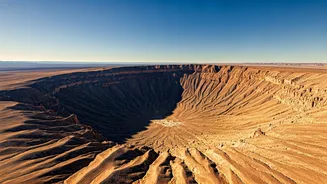
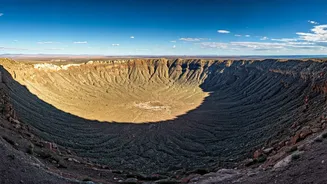
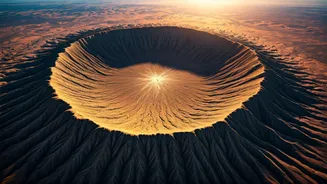
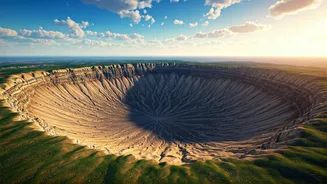
Nestled in the vast Arizona desert, the Barringer Crater, also known as Meteor Crater, offers an easily accessible glimpse into the immense power of space.
This colossal impact scar, etched into the Earth's surface approximately 50,000 years ago, remains remarkably preserved. Visitors can traverse the rim, absorbing the sheer scale of this geological marvel. The adjacent visitor center enhances the experience with captivating exhibits on space phenomena and showcases genuine fragments of the meteorite that created this awe-inspiring site, providing an up-close understanding of impact crater formation.
India's Lonar Lake
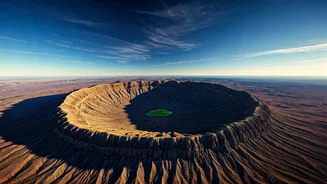
The Lonar Crater Lake, located in the Buldhana district of Maharashtra, India, is a truly unique astronomical phenomenon. Its formation, occurring around 50,000 years ago, is particularly noteworthy as it was created in basaltic rock, a rare occurrence for impact craters. What makes Lonar Crater Lake exceptionally special today is its water composition, which is a peculiar blend of both salty and alkaline, fostering a distinct ecosystem unlike any other. The surrounding landscape is further enhanced by ancient temples and lush greenery, creating an atmosphere of tranquility alongside its scientific intrigue.
South Africa's Vredefort Dome
Recognized as the largest confirmed impact structure on our planet, the Vredefort Crater in South Africa bears the scars of an impact that took place over 2 billion years ago. Consequently, it no longer presents as a classic crater but rather a vast, ancient landscape shaped by immense geological forces over eons. Despite natural erosion, the sheer magnitude of the original impact zone is still evident. Its remarkable geological significance has earned it a UNESCO World Heritage Site designation, inviting enthusiasts to explore its terrain and examine the ancient rock formations that narrate the story of this primordial cosmic event.
Canada's Pingualuit Crater
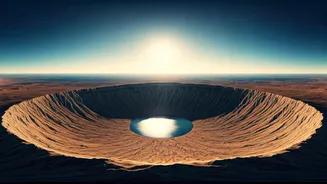
The Pingualuit Crater in Canada offers a sense of untouched remoteness and pristine natural beauty. Its defining characteristic is its near-perfect circular form, making it visually striking. Within its depths lies a lake of remarkable clarity and considerable depth. Reaching this remote location requires a dedicated effort, but the breathtaking scenery is a worthy reward. The profound silence and serene environment contribute to a powerful appreciation of the immense force unleashed by the meteor impact that formed it.
Australia's Wolfe Creek Crater
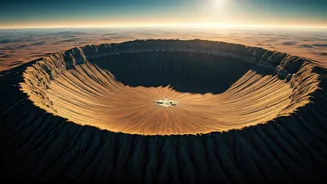
Emerging from the Australian landscape, the Wolfe Creek Crater stands as a testament to a relatively recent cosmic collision, estimated to have occurred approximately 120,000 years ago. Its impact shape remains strikingly well-defined, allowing visitors to clearly discern the scar left by its celestial visitor. The site provides opportunities to walk along its rim or even descend into the crater itself. Beyond its geological importance, Wolfe Creek Crater holds significant cultural value for local Aboriginal communities, who possess unique ancestral narratives concerning its formation, blending natural history with rich cultural heritage.