







In-House Chip Aspirations
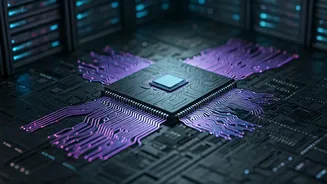
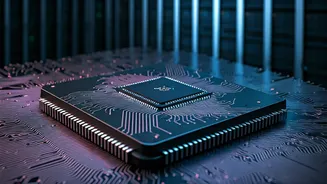
Artificial intelligence leader Anthropic is reportedly investigating the possibility of creating its own custom-designed silicon. This strategic consideration
stems from the intense and ongoing demand for specialized chips essential for developing and operating sophisticated AI models. Sources close to the matter indicate these plans are currently in their nascent stages, with the company yet to make a definitive commitment to actual chip design or assemble a dedicated engineering team for such a project. It remains a possibility that Anthropic may ultimately choose to continue sourcing its AI processing units from external providers. The immense pressure to secure sufficient computing power to meet the growing needs of its advanced AI systems, such as its popular AI model Claude, has spurred this internal evaluation. The company has seen a remarkable acceleration in demand for its AI model Claude, with its run-rate revenue skyrocketing to over $30 billion, a substantial leap from approximately $9 billion at the end of 2025, as recently announced by Anthropic. This surge underscores the critical importance of robust and readily available AI hardware.
Strategic Hardware Sourcing
Currently, Anthropic relies on a diverse array of AI chips to power its groundbreaking software and the conversational capabilities of Claude. This includes utilizing tensor processing units (TPUs) engineered by Google, a key player in the AI hardware market, as well as chips developed by Amazon. The company's recent strategic maneuvers include a long-term agreement with Google and Broadcom, focusing on the design of these TPUs. This partnership signifies a broader commitment to bolstering U.S. computing infrastructure, with Anthropic pledging to invest an impressive $50 billion. This move to secure essential AI hardware is not unique to Anthropic; it mirrors similar exploratory efforts by other major technology firms, including Meta and OpenAI, who are also considering or actively pursuing the development of their own proprietary AI chips. These significant investments are driven by the need to maintain a competitive edge and ensure the scalability of their AI initiatives in a market characterized by supply constraints.
The Cost of Innovation
Embarking on the journey to design advanced AI chips is a monumental undertaking, both technically and financially. Industry insiders estimate that the development process for a cutting-edge AI chip can easily reach upwards of half a billion dollars. This substantial cost is attributed to several critical factors. Firstly, companies must recruit and retain highly specialized and skilled engineers who possess the intricate knowledge required for chip architecture and design. Secondly, significant financial resources are allocated to the manufacturing process itself, ensuring a high degree of precision and minimizing defects. The complexity of fabricating these advanced chips demands state-of-the-art facilities and rigorous quality control measures. The pursuit of in-house chip development, while potentially offering greater control and optimization, therefore represents a significant strategic and financial commitment for any organization aiming to lead in the AI revolution.