





A Deliberate Disorientation
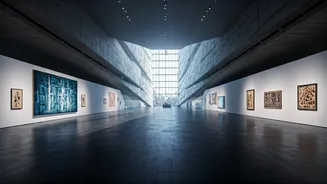
Upon entering the David Geffen Galleries at LACMA, a sense of delightful disorientation quickly sets in. The 900-foot-long structure, a collaboration between
architect Peter Zumthor and the museum, eschews conventional museum layouts. Instead, its curving concrete and glass form, which rises nearly 30 feet above Wilshire Boulevard and resembles an amoeba from above, is designed to be explored without a prescribed route. This deliberate lack of a set path is central to the experience, encouraging visitors to wander and discover art organically, much like navigating a vibrant city. The initial feeling of being lost is precisely the intended effect, fostering a more personal and exploratory connection with the diverse collection.
Light and Transparency
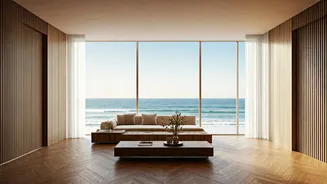
One of the most striking features of the David Geffen Galleries is its masterful use of natural light. Unlike traditional museums that often seal art away in climate-controlled, dimly lit rooms, Zumthor embraced transparency. Floor-to-ceiling glass walls line the perimeter, allowing sunlight to stream in and transform the galleries throughout the day. This dynamic interplay of light creates ever-changing moods and perspectives, making a space feel entirely different from morning to afternoon. To further enhance this effect without compromising the art, specially designed transparent curtains made of chrome fabric by Reiko Sudō gently diffuse the light, maintaining vibrancy. This approach offers a refreshing departure from the often-claustrophobic atmosphere of conventional museum spaces, promoting a more open and engaging viewing experience.
No Grand Entrance
LACMA's CEO and Director, Michael Govan, envisioned a museum that rejected hierarchies and the concept of a singular, imposing façade. In practice, this translates to an absence of a grand entrance or a soaring atrium designed to emphasize institutional importance. Instead, the visitor is invited to simply wander, a philosophy reflected in the museum's own guidebook, titled 'Wander.' This intentional design signifies that there isn't a single definitive narrative or path through the art, mirroring the multifaceted nature of art history itself. The experience is intentionally fluid, encouraging visitors to forge their own connections and interpretations, moving away from a didactic presentation towards a more personal and discovery-driven engagement with the collection.
Artistic Pathways
Navigating the David Geffen Galleries is often compared to embarking on a nature hike or exploring distinct city neighborhoods. The curators' inaugural exhibition breaks away from traditional categorizations like medium or subject matter. Instead, the artworks are thoughtfully organized around major bodies of water – the Pacific, Indian, Atlantic, and Mediterranean – to trace the historical movement and interaction of artists along maritime trade routes. This unconventional approach leads to thrilling juxtapositions: a Francis Bacon triptych might be encountered moments before an ancient Chinese porcelain vessel, followed by a photographic work by Los Angeles artist Todd Gray. The aim is to offer a contemporary way of experiencing art, perhaps resonating with a generation accustomed to fluid information streams, making the museum feel both relevant and engaging.
Architectural Canvas
The very architecture of the David Geffen Galleries serves as a blank slate, a 110,000-square-foot, single-level space devoid of any predetermined circuit. This design principle ensures that no single era, tradition, or artistic discipline is elevated above another. The open-plan layout encourages an unscripted exploration, allowing art to be discovered in unexpected sequences. Beyond the interior, the plaza beneath the building also functions as an expansive canvas. Mariana Castillo Deball's monumental work, 'Feathered Changes,' imprints patterns and forms onto the concrete walkways, evoking the geological history and inherent character of the land. This integration of art and architecture further blurs the lines between the museum and its environment, creating a holistic experience.
L.A. Exploration Parallel
The experience within the David Geffen Galleries often evokes the sensation of moving through the diverse urban landscape of Los Angeles itself. As one gazes out at palm trees or contemplates artworks like Henri Matisse's ceramic wall piece, 'La Gerbe,' the instinct is to stop trying to find one's bearings and instead follow whatever visually captivates. This might lead to encountering a vintage redwood surfboard once owned by Hawaiian Olympian Duke Kahanamoku, a spectral, full-scale replica of a section of Seoul's Gyeongbok Palace by Do Ho Suh, or classical Greek and Roman statues. The museum’s fluid, non-linear layout mirrors the experience of traversing different Los Angeles neighborhoods in a single afternoon – from Echo Park to West Hollywood to Venice Beach – each offering its own distinct atmosphere and identity. This parallel between art exploration and urban discovery is a testament to the building's design philosophy.