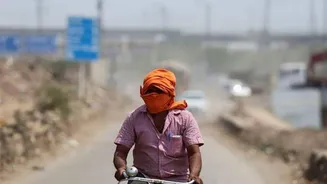







Silent Heat Stress
A 62-year-old man, despite being mindful of his pre-existing health conditions and the midday heat, experienced a sudden collapse during his morning walk
in Delhi. This incident highlights how heat wave stress can be deceptively severe, even during seemingly safer hours. The individual, who had hypertension, diabetes, and a heart stent, felt dizzy and excessively sweaty before his condition worsened. His body's natural cooling mechanism began to fail, evidenced by reduced sweating, leading to nausea, disorientation, and a critical drop in blood pressure, alongside a dangerously high pulse and elevated body temperature. His blood sugar spiked to 250 mg/dL, a clear indicator of the body's stress response amplified by dehydration. Subsequent medical evaluations revealed acute kidney injury and significant dehydration, with creatinine levels at 1.8 and sodium at 150 mmol/L. An ECG showed a high heart rate, posing a risk of heart attack and stroke. This scenario underscores that even moderate outdoor activity can overwhelm the body's thermal regulation when heat is extreme, placing immense strain on vital organs, particularly the heart.
Body's Overheating Battle
The human body's ability to cope with extreme heat is tested severely, as the system struggles to dissipate absorbed heat efficiently. To cool down, the heart must work harder, increasing its rate and output to enhance blood flow to the skin. This heightened cardiovascular demand is exacerbated by dehydration, which reduces blood volume, and the widening of blood vessels to release heat. These physiological responses can significantly increase the risk of cardiovascular complications, including the worsening of existing conditions like hypertension and heart failure, and can even trigger arrhythmias or acute myocardial infarctions. The strain is cumulative; even short periods of exposure to high temperatures can push the body past its breaking point, leading to conditions like heat exhaustion, which is a precursor to more dangerous heat-related illnesses if not addressed promptly. The transition from profuse sweating to reduced sweating is a critical warning sign of the body's cooling system failing.
Long-Term Heat Impacts
The pervasive influence of extreme heat extends far beyond immediate health crises, posing long-term risks to critical organs and exacerbating chronic illnesses. The World Health Organization has identified heat stress as a leading cause of weather-related mortality. In India, a significant portion of districts, housing a majority of the population, are at high risk from extreme heat. This risk is amplified in urban areas due to the 'urban heat island' effect, where concrete structures retain and radiate heat, making cities feel hotter than surrounding regions. High humidity further complicates the issue by hindering sweat evaporation, the body's primary cooling mechanism. When body temperatures rise above 37°C, the effectiveness of sweating is compromised, increasing the body's internal heat load. This prolonged stress can lead to irreversible damage to organs like the heart, kidneys, and brain. For individuals with pre-existing conditions such as diabetes or lung disease, heat stress can trigger acute episodes and accelerate disease progression. Even in individuals without chronic ailments, repeated exposure to heat strain and dehydration can lead to subclinical injury, ultimately resulting in permanent organ damage, such as kidney failure.
Vulnerable Groups Identified
Certain demographics are disproportionately susceptible to the detrimental effects of heat waves, requiring heightened awareness and protective measures. Pregnant women, for instance, face amplified risks due to increased blood volume and a higher body surface area to mass ratio, which makes heat dissipation more challenging. Prolonged heat exposure can silently impact them, potentially reducing blood flow to the placenta, increasing foetal heart rate, and leading to lower birth weights. Early-term heat exposure might even be linked to birth defects. Individuals with diabetes are also at significant risk; nerve damage associated with the condition can impair their ability to sweat, hindering the body's cooling process, and heat can affect insulin absorption rates. Furthermore, the elderly and those with pre-existing chronic conditions, like cardiovascular diseases, are more vulnerable. For those with comorbidities, even brief periods of heat exposure, as short as 15 to 30 minutes, can impose a severe strain on the heart. Additionally, certain medications, such as diuretics, can interact with heat exposure by increasing fluid loss, potentially leading to dangerous electrolyte imbalances, particularly low potassium levels.
Monitoring Heat Illnesses
Accurate tracking of heat-related illnesses is crucial for effective public health response, yet current methodologies often underestimate the true burden. Many heat-related deaths are not officially classified as such, instead being attributed to underlying causes like cardiac or renal failure. A more comprehensive approach involves monitoring 'all-cause mortality' during heat events; a significant rise in daily deaths, even without a declared epidemic, signals the impact of heat. Similarly, morbidity can be gauged by spikes in emergency room visits, hospital admissions, and ambulance calls. Systematic collection and analysis of this data by institutions like Indian Institutes of Technology and local universities are essential. Structured governance, potentially including a dedicated 'Chief Heat Officer' in cities, is also vital. National efforts to create pooled data systems are a step forward, but mandatory reporting and integration are needed to establish a unified heat protocol for prevention and response, providing a clearer picture of the crisis through a national dashboard.
Beyond Immediate Health
The consequences of extreme heat extend beyond acute medical emergencies, affecting productivity, safety, and mental well-being. Declining worker productivity due to heat stress can lead to significant economic strain. The elevated temperatures also increase the likelihood of accidents in various settings. Furthermore, heat can negatively impact mental health, manifesting as increased irritability, stress, and even aggression, contributing to phenomena like road rage. While heat action plans have been implemented in many Indian cities since 2010, their effectiveness can be limited by a lack of legal mandates and dedicated funding. Ahmedabad's pioneering heat action plan, however, has demonstrated substantial reductions in mortality, partly due to initiatives like 'cool roofs' in low-income areas. A multi-layered approach, incorporating early warning systems, public awareness campaigns, health professional training, and robust emergency response, is essential. Integrating climate projections with hyperlocal vulnerability assessments can enable targeted alerts to protect at-risk populations and help communities adapt their activities during periods of high heat.