




A Glimpse into Okefenokee
Nestled in southeastern Georgia, the Okefenokee Swamp stands as North America's largest blackwater ecosystem, a vital habitat for numerous endangered species,
including the indigo snake and the wood stork. Its name, derived from the Muscogee word for "land of the trembling earth," poetically describes the unique peat formations that shift beneath the water's surface. Historically inhabited by the Muscogee people, the swamp later faced logging and attempts at drainage before being designated a wildlife refuge in 1937 by President Franklin D. Roosevelt. The robust infrastructure visible today, including recreational areas and a visitor center, is largely thanks to the efforts of the Civilian Conservation Corps. Spanning an impressive 407,000 acres, the Okefenokee is not only a sanctuary for wildlife but also a candidate for UNESCO World Heritage status, a distinction that would underscore its global ecological importance and potentially bolster conservation efforts and tourism.
Planning Your Expedition
To experience the Okefenokee Swamp, visitors typically access it through one of three main entry points: Folkston, Waycross, or Stephen C. Foster State Park. The Folkston entrance, located on the eastern side, is the most frequented, offering access to popular boat tours and significant landmarks. The northern entrance near Waycross leads to the Okefenokee Swamp Park area, featuring boardwalks, wildlife viewing opportunities, and boat tours, alongside shops and dining options, making it the most developed access point. To the west, Stephen C. Foster State Park in Fargo is recognized as a Dark Sky Park and provides kayak rentals, boat tours, a boardwalk, and nature trails for a more immersive experience.
Navigating to Nature's Door
Reaching the Okefenokee Swamp requires some planning due to its relatively remote location. The nearest major airport is Jacksonville International Airport (JAX) in Florida, approximately an hour's drive away. For those traveling from Atlanta, the journey by car typically takes around five hours. A personal vehicle is highly recommended, not only for reaching the swamp but also for navigating within its expansive boundaries. While driving is essential for initial access, exploring the park can also be done by bicycle on many of the internal roads. For a more intimate encounter with the waterways, bringing or renting a kayak or canoe offers a fantastic way to explore independently.
Ideal Seasons for Exploration
While summer in the Okefenokee Swamp can be intensely hot and humid, presenting a challenge for some visitors, the ideal times for a visit are the cooler and more temperate months of fall and spring. Throughout the year, the Okefenokee National Wildlife Refuge observes several fee-free days, offering accessible opportunities for exploration. Special events enhance the visitor experience; Stephen C. Foster State Park hosts regular stargazing gatherings, perfect for enjoying the dark skies. In October, the Okefenokee Festival in Folkston delves into the region's rich history and environment, culminating in the unique "Swamp Hollerin’ Contest." November brings Pioneer Days at the Chesser Island Homestead, a living history event with demonstrations, traditional games, live music, and the sweet spectacle of a sugar cane boil, transporting visitors back in time.
Engaging Swamp Activities
Embarking on a boat tour is arguably the most quintessential Okefenokee experience, offering unparalleled opportunities to observe alligators lurking just beneath the water's surface and a plethora of waterfowl soaring above. These guided tours, available at Stephen C. Foster State Park for a fee, typically last one to two hours and are an excellent way to gain insight into the swamp's ecosystem. It's important to note that these boats are not wheelchair accessible, and tour operations can be influenced by water levels, so checking in advance and booking during peak season is advised. For those with limited time, Swamp Island Drive presents a condensed yet comprehensive way to sample the swamp's offerings. This seven-mile loop, traversable by car or bicycle, is a local favorite for morning excursions. A map from the visitor center is invaluable for identifying diverse plant life and scenic overlooks along the route. A significant historical landmark accessible via Swamp Island Drive is the Chesser Island Homestead, the remarkably preserved self-sufficient home of the Chesser family, who resided there from the 1850s until 1971. The homestead includes a farmstead, where sugar cane was once harvested, and a trail leading to a viewing platform overlooking the swamp.
Wildlife and Landscape Wonders
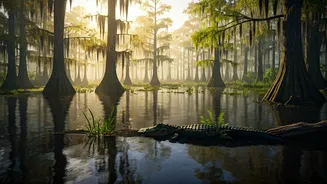
The Okefenokee Swamp's primary allure lies in its extraordinarily abundant and diverse wildlife. Visitors are almost certain to encounter alligators, with an estimated population of around 15,000 inhabitants thriving within the swamp. Birdwatching enthusiasts will find a paradise, with opportunities to spot various species of herons and egrets. Venturing deeper into the swamp's interior may even reveal sightings of deer, bobcats, and the elusive black bear. Beyond its fauna, the swamp's landscape itself is a natural marvel, characterized by its vast, dark waters, cypress trees draped in Spanish moss, and the unique "trembling earth" phenomenon that gives the swamp its name. The interplay of light and shadow through the dense canopy creates a mysterious and captivating atmosphere.
Lodging Amidst Nature
Accommodation options surrounding the Okefenokee Swamp lean towards rustic charm, offering a range of choices from basic lodge rooms to campsites. Stephen C. Foster State Park provides campsites suitable for tents, RVs, and trailers, allowing visitors to immerse themselves in the natural surroundings. For groups seeking a communal experience, the Okefenokee Swamp Park Campground on the Fargo side offers organized facilities. Further northeast, the Okefenokee Outdoor Center provides both campsites and cottages for a comfortable stay. Outside the Folkston entrance, Okefenokee Retreat features a designated stargazing field, a camp store, and a selection of campsites and cabins. For those desiring a more adventurous and unique experience, consider booking one of the seasonal, boat-access-only platform tents, elevated for a truly immersive swamp stay.
Culinary Discoveries
Dining options directly within the Okefenokee Swamp area are quite limited, making it advisable for visitors to pack groceries and their own cooking supplies, especially if camping. While some visitor centers may offer snacks or operate seasonal cafes, these are not typically recommended as primary dining destinations. For those craving a hot meal after a few days of exploration or camping, planning a drive to the nearby towns of Folkston or Waycross is the most practical approach. Folkston offers a small selection of eateries. Waycross provides a slightly broader range of culinary choices, including local diners and established restaurants. For an authentic taste of the region, seeking out local establishments that have been serving the community for many years is a good strategy.