






Heat-Defying Breakthrough
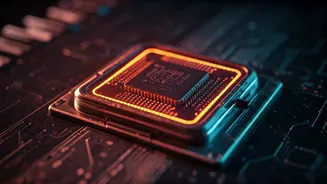
USC engineers have successfully developed a novel memory chip capable of operating at an incredible 700°C, a temperature that would easily melt aluminum
and significantly surpasses the operational limits of typical electronic components. This remarkable achievement brings the concept of computers functioning in extreme environments, reminiscent of science fiction portrayals, much closer to reality. The device's resilience to such intense heat unlocks possibilities for applications where current technology simply cannot endure. Researchers are hailing this development as a significant leap forward in high-temperature computing, pushing the boundaries of what was previously thought possible for semiconductor devices. This innovation could redefine the capabilities of electronics in harsh conditions, enabling operations in previously inaccessible locations or scenarios.
Accidental Innovation
This extraordinary advancement stemmed from an unexpected discovery during experiments involving graphene. The engineering team, led by Joshua Yang, devised a unique layered structure composed of tungsten, hafnium oxide, and graphene. This specific arrangement creates a memristor, a type of memory that possesses computational capabilities. The crucial role of the graphene layer is to act as a barrier, preventing tungsten atoms from migrating and causing short circuits – a persistent challenge that had hindered previous high-temperature memory designs. This accidental configuration has resulted in what is described as the best high-temperature memory ever demonstrated, with the device successfully retaining data for over 50 hours without requiring any refresh cycles, a testament to its stability and performance under extreme conditions.
Beyond Earth's Limits
The implications of this heat-resistant technology are vast, opening up computing capabilities in environments previously considered too harsh for electronics. Imagine deploying probes to Venus, where surface temperatures can reach 500°C, with confidence in their operational integrity. This chip could also revolutionize operations in geothermal power plants and nuclear facilities, enabling on-site data processing instead of costly and complex data transmission to cooler locations. The automotive sector stands to benefit immensely, with the potential for exceptionally robust electronics that can withstand extreme under-the-hood temperatures. Furthermore, these memristors are exceptionally adept at matrix multiplication, a fundamental operation critical for accelerating artificial intelligence tasks, suggesting that future computing devices could operate efficiently even under intense heat.
Surpassing Previous Records
This new chip significantly eclipses prior achievements in the realm of extreme temperature computing. Earlier attempts to create heat-tolerant electronics achieved much lower temperature thresholds. For instance, some aerospace applications have reached temperatures around 225-300°C, while other research has explored elevated temperature operation for limited durations using materials like gallium nitride contacts. In stark contrast, the USC device operates continuously at a remarkable 700°C, maintaining data integrity throughout. The testing was halted due to the limitations of the available equipment, not due to any failure of the device itself. Notably, the use of standard semiconductor materials like tungsten and hafnium oxide means that these chips can be manufactured using existing fabrication facilities, eliminating the need for specialized or exotic production processes.
Commercialization Pathway
The path towards making this breakthrough commercially viable is being paved by a startup company named TetraMem. This venture is actively working to bring the memristor technology to market, with a particular focus on its applications in artificial intelligence. A key advantage is that the materials used are compatible with current semiconductor manufacturing processes employed by leading foundries such as TSMC and Samsung. This compatibility means that scaling up production will not necessitate a complete overhaul of the existing semiconductor industry infrastructure. Whether the goal is to facilitate interplanetary missions or to create consumer electronics that can endure scorching environments like Death Valley, this innovative graphene-based memory chip has the potential to fundamentally alter the landscape of where and how computing devices can operate.