






A Farmer's Colorful Vision
Ram Pratap Sharma, a 63-year-old farmer from Siwah village in Panipat, Haryana, is redefining watermelon cultivation. Having transitioned to full-time
fruit and vegetable farming in 2011, he embraced modern agricultural technologies like polyhouses, protective nets, and drip irrigation. His farm, strategically located near National Highway-44, allows for swift delivery of fresh produce to markets in Panipat, Delhi, Gurgaon, Chandigarh, and Ludhiana, reaching industrialist clients and online businesses alike. Sharma's farm is a hub of diversity, growing over 20 types of vegetables per season, including intercropped varieties like kakri with tori and karela, alongside fruits such as guava and dragon fruit. This year, he dedicated a significant 1.5 acres specifically to his unique watermelons, while the remainder of his land was used for crops like spinach, fenugreek, guava, peach, and pomegranate, showcasing a comprehensive approach to his farming enterprise.
Introducing Rainbow Watermelons
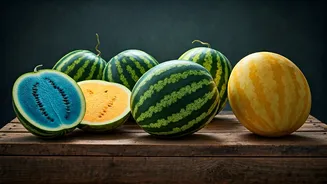
Sharma has gained renown for cultivating five distinctive watermelon varieties that go beyond the conventional red flesh. While most watermelons are recognizable by their green exterior and red interior, his special strains offer an astonishing spectrum of flesh colors. These include not only various shades of red, orange, and yellow but also a striking blue hue. To achieve this, Sharma sources premium watermelon seeds from Thailand and Taiwan, investing approximately ₹1 lakh per kilogram for these specialized seeds. Remarkably, only about 300 grams of these seeds are needed to cultivate approximately 6,000 plants across a single acre, demonstrating the high yield potential of this exotic produce. This innovative approach to watermelon genetics has transformed his farm into a visually stunning and commercially viable operation.
Pricing and New Varieties
The vibrant and unusual watermelons cultivated by Ram Pratap Sharma are offered to consumers at an accessible price point of ₹50 per kilogram. Beyond the initial colorful varieties, Sharma has also introduced three novel strains: 'Low Munch', 'Orange Munch', and '24 Carat Gold'. The 'Orange Munch' variety presents a familiar green rind but surprises with a bright, inviting orange flesh inside. Similarly, 'Yellow Munch' features a green exterior encasing a sweet yellow flesh. The '24 Carat Gold' is particularly eye-catching, boasting a distinctive yellow rind that complements its entirely yellow flesh. All these unique varieties are now available in the market, providing consumers with a delightful and visually appealing alternative to traditional watermelons, all while maintaining a consistent price of ₹50 per kilogram.
Cultivation Economics and Success
Ram Pratap Sharma's successful foray into growing these uniquely colored watermelons began in 2019 when he first experimented with Taiwanese seeds, yielding excellent results. The investment required for cultivating one acre of these watermelons is substantial, amounting to approximately ₹2 lakh. However, this investment is handsomely rewarded, generating an estimated revenue of around ₹6 lakh per acre. After accounting for all cultivation expenses, Sharma realizes a net profit of approximately ₹4 lakh from each acre dedicated to these special watermelons, as reported by Etv Bharat. This impressive profitability underscores the commercial viability and success of his innovative farming practices, demonstrating that specialized crops can yield significant financial returns.
Expert Acclaim and Advice
Ram Pratap Sharma's pioneering work has garnered significant praise from agricultural experts. Ranbir Singh, Haryana's Director General of Horticulture, describes Sharma as a "hardworking, innovative and progressive" farmer, highlighting his ability to achieve high incomes from a modest landholding through the strategic use of technology and cultivation patterns. Singh has visited Sharma's farm multiple times to observe his methods. Rakesh Kumar, Deputy Director at Gharaunda's Vegetable Centre of Excellence, notes that Panipat's soil conditions are ideal for such cultivation, further supported by government subsidies of up to 85% for essential equipment like drip irrigation systems. Sharma himself often advises fellow farmers, emphasizing that with diligent effort, it is achievable to earn around ₹2 lakh per acre annually from vegetables, complemented by fruit cultivation on the same land. His contributions have also been recognized previously, including an honor from Haryana's former Chief Minister.