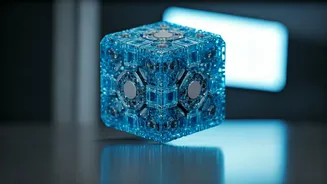









Fluidic Unit Design
At the heart of this technological marvel are air-powered soft robots built from modular fluidic units. This unique design approach enables the robots to
perform their functions without needing traditional electronics or complicated software. These modular units are the key to the robots' autonomy, allowing them to adapt to different tasks and environments. This innovative design allows the robot's body to handle much of the 'thinking' required, demonstrating a paradigm shift in how robots are conceived and built.
Autonomous Capabilities Unveiled
These brain-free machines are capable of a surprising array of actions. They can hop, facilitating movement across various terrains. They can crawl, enabling navigation in tight spaces. Moreover, these robots have the ability to sort objects, demonstrating a rudimentary form of decision-making. They can even avoid edges, showcasing their ability to perceive and respond to their immediate surroundings. These autonomous capabilities signify a step forward in robotics, showing how robots can perform complex tasks without the need for extensive computational power.
Modular Fluidic Units
The secret to these robots' abilities is in the modular fluidic units. These units are self-contained and work together to enable the robot's functionalities. This design is what eliminates the need for external software or electronics. The modularity also allows for flexibility in the design and construction of the robots. By arranging and reconfiguring the units, engineers can modify the robots' capabilities and adapt them for various applications. This modular design helps the robots handle much of their own 'thinking,' showcasing a new way to develop autonomous robotics.
Future Robot Bodies
This research suggests a future where the robot's body itself takes on a larger role in cognitive processing. Instead of relying on a central processing unit, the robots are designed so their physical structure enables them to make decisions and perform actions. This represents a significant shift in how we think about robot design. This could lead to more durable, adaptable, and efficient robots in many different fields. These new robots have the potential to change how we build machines and give us a new outlook on robotics.