







The Reign of Dates
During the holy month of Ramadan, the fruit market in Kannur experiences a significant surge in activity, with dates emerging as the undisputed star. A
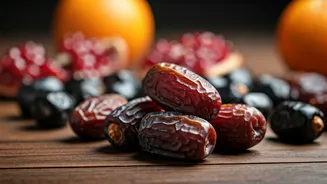
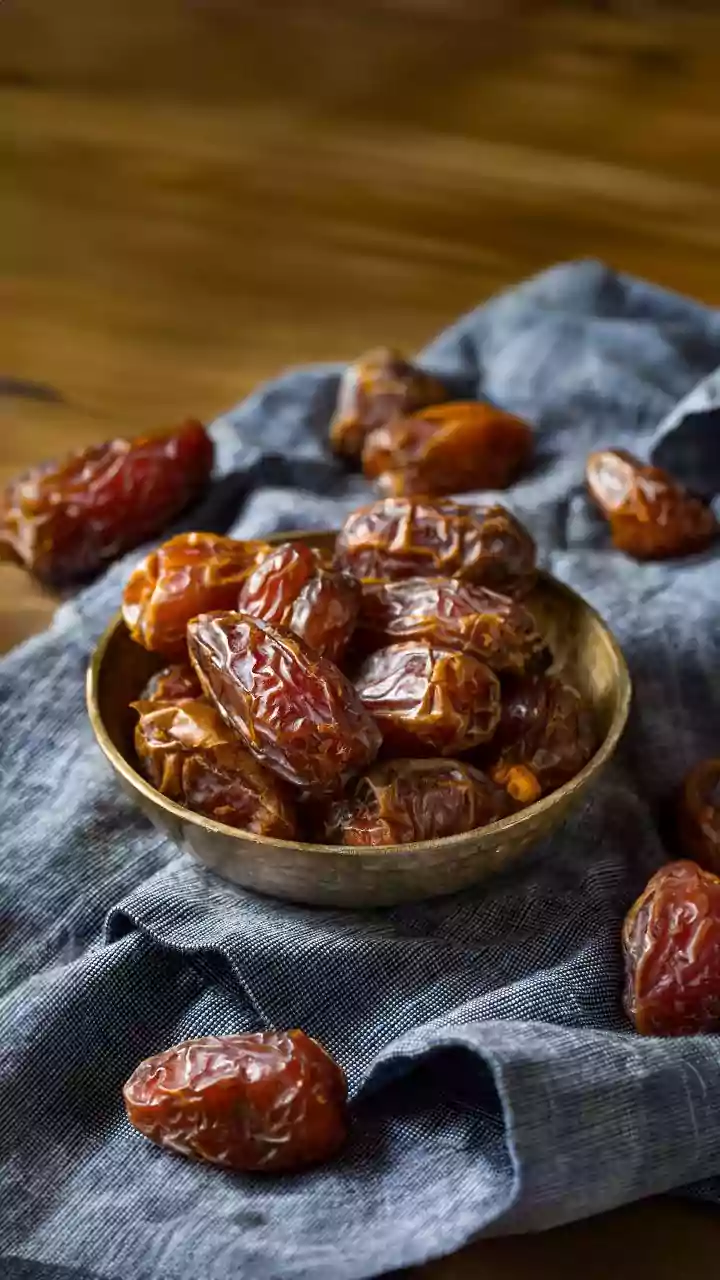
wide assortment of dates, originating from various international locations, fills the stalls, catering to a spectrum of consumer tastes and budgets. These imported dates are strategically priced between ₹150 and an impressive ₹1,100 per kilogram, highlighting a clear stratification in their market value. At the pinnacle of this selection is the highly sought-after Medjool date, renowned for its substantial size and luxurious texture. These premium dates are predominantly sourced from Jordan, though they also make their way from Pakistan and Israel, commanding the highest price point of ₹1,100 per kilogram. The selection process takes into account size and overall quality, further influencing their cost. Following closely is the Ajwa date, a variety steeped in tradition and often associated with medicinal properties, available from ₹600 per kilogram. The softer Mazafati variety, imported from Iran, offers a different texture and is also a popular choice. Saudi Arabian dates, particularly the Safawi variety which starts at ₹350 per kilogram, are in high demand due to their attractive combination of quality and affordability, making them a favorite among shoppers seeking value.
Beyond Dates: Other Delights
While dates capture much of the attention, the Ramadan fruit rush in Kannur also showcases a diverse range of other popular produce and dry fruits. The humble Karakka date, a more budget-friendly option, is readily available, priced between ₹150 and ₹350 per kilogram. Interestingly, market dynamics have shifted, with K Mohammed Riyas, owner of Swadeshi Dry Fruits Impex, noting that Karakka was once more expensive, but consumer preference has increasingly leaned towards softer date varieties. He also observed that during Ramadan, the overall sales of fruits and dry fruits typically double, a phenomenon attributed partly to bulk purchases for charitable distribution. Beyond dates, other dry fruits such as almonds, figs, and walnuts are also experiencing significant demand. Among the almonds, the Mamra variety, imported from Tanzania, stands out as the most expensive, retailing at a remarkable ₹3,000 per kilogram. Figs are also a premium offering, with prices reaching up to ₹1,500 per kilogram. Encouragingly for consumers, traders report that the prices of these dry fruits have remained relatively stable compared to the previous Ramadan, with no sharp increases observed. This stability allows shoppers to enjoy a wider selection of festive treats without a significant financial burden.
Seasonal Favorites & Newcomers
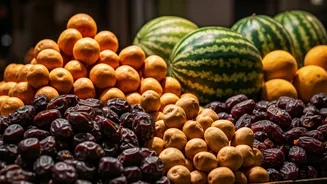
Amidst the variety of imported fruits, the watermelon continues to hold its ground as a beloved staple during the fasting period, primarily due to its exceptional water content, priced at an accessible ₹28 per kilogram. A noteworthy newcomer to the market this season is the mandarin orange, imported from China and Morocco. These small, seedless, and inherently sweet oranges are a premium offering, priced at ₹200 per kilogram. Other varieties of oranges are more affordably priced between ₹80 and ₹100 per kilogram, while citrus oranges are available at ₹120 per kilogram. Despite the abundance of choices, traders like P Sajir of JTS shop mention that the typically brisk early Ramadan sales haven't quite matched previous years, although fruit prices are generally slightly lower than last year. The market also features a selection of apple varieties, ranging from ₹220 to ₹300 per kilogram, with Gala apples specifically priced at ₹280 per kilogram. Sweet limes, predominantly sourced from Maharashtra, are available for ₹220 per kilogram. Avocados from Tanzania are a luxury item at ₹600 per kilogram. For those seeking festive indulgences, strawberries are also present, and cherries are offered at a high-end price of ₹2,000 per kilogram, completing the diverse landscape of fruits available during this important season.