






Ube's Global Rise
The humble ube, a Filipino purple yam celebrated for its distinct earthy flavour, creamy texture, and stunning natural hue, has transcended its traditional
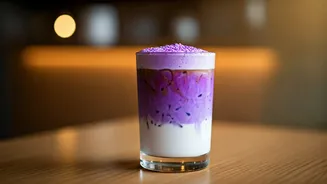
dessert applications to become a global culinary phenomenon. Initially a staple in Filipino kitchens, ube has now infiltrated menus worldwide, most notably in the beverage sector. Its journey from a core ingredient in dishes like cakes and ice cream to a star player in frothy coffees showcases its versatility and undeniable visual appeal. This transformation is largely driven by social media trends, where visually striking food and drinks quickly gain traction. Cafes across India, eager to keep pace with international fads like boba tea and creatively merchandised offerings, have readily adopted ube, making it a common sight in their colourful coffee creations. The aesthetic allure of ube coffee, with its pastel purples and glossy finishes, makes it an instant hit for Instagram feeds, solidifying its status as a trendsetter.
Nutritional Profile of Ube
Beyond its captivating colour and unique taste, ube offers a compelling nutritional profile that contributes to its growing popularity. This vibrant root vegetable is a good source of carbohydrates, essential for energy, and provides a decent amount of potassium and Vitamin C. Scientifically, ube is packed with potent plant compounds and antioxidants, notably anthocyanins. These natural pigments are responsible for ube's rich purple colour and are recognized for their potential health benefits, including contributing to reduced blood pressure and inflammation. Furthermore, the flavonoids present in ube may play a beneficial role in managing blood sugar levels, particularly for individuals with Type 2 diabetes. They have also been linked to improved gut health, adding another layer of well-being to this nutrient-dense ingredient. These inherent qualities make ube a naturally healthy choice, often lauded for its contributions to overall wellness.
The Caveats of Cafe Ube
While the ube vegetable itself boasts impressive health credentials, the transformation of ube into café-style coffee beverages introduces significant considerations. The inherent health benefits of ube can be overshadowed by the additions commonly found in café versions, such as generous amounts of sugar, flavour syrups, and rich cream. These accompaniments can elevate the calorie and sugar content substantially, potentially negating the positive attributes of the yam itself. For instance, while ube on its own might be a beneficial ingredient for diabetics, the added sugars and artificial sweeteners in a commercially prepared ube latte could have an adverse effect. Therefore, it's crucial to be mindful of how ube coffee is prepared. Opting for versions with less added sugar and healthier dairy or non-dairy alternatives is advisable. While enjoying a ube coffee occasionally can be a delightful experience, making it a daily staple without considering the ingredients might not align with health goals.