







The Fruitful Genius
In Malihabad, Uttar Pradesh, a nearly 85-year-old visionary named Kalimullah Khan has achieved what many consider a horticultural marvel. Known affectionately
as the 'Mango Man of India,' Khan has dedicated himself to the art of mango cultivation, transforming a family orchard into a living testament to the fruit's diversity. His journey began with a familial legacy, inheriting his grandfather's orchard, and a profound realization that his true calling lay not in formal education, but in the soil. Despite dropping out of school after failing the seventh grade, Khan's innate curiosity and hands-on approach led him to master the intricate science of grafting. This skill, honed over decades, has allowed him to imbue a single, ancient tree with an astonishing array of mango types. His achievements have earned him national recognition, including the prestigious Padma Shri award in 2008, and a place in the Limca Book of Records, solidifying his reputation as a national treasure for his unique contribution to agriculture and horticulture.
A Grafted Legacy
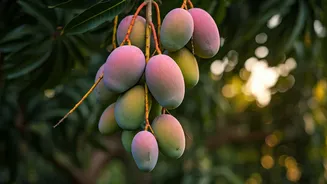
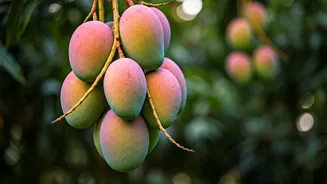
The genesis of Kalimullah Khan's extraordinary project traces back to 1957 when he first conceived the ambitious idea of grafting multiple mango varieties onto a single tree. Although an initial attempt was tragically lost to floods, this setback proved to be a valuable learning experience, teaching him to manage waterlogged conditions. Undeterred, Khan persevered, intensifying his grafting experiments on his grandfather's venerable mango tree by 1987. This ancient tree, now approximately 125 years old, has become the remarkable host for an astounding number of mango cultivars. Through persistent experimentation and meticulous care over several decades, the tree has transformed into a sprawling giant, standing nine meters tall and currently yielding between 300 and 350 distinct mango varieties. Each of these fruits retains its unique characteristics—flavor, size, and color—thanks to the precise technique of grafting, where branches from different donor trees are skillfully attached to the robust rootstock of the old tree.
The Art of Grafting
At the heart of Kalimullah Khan's unparalleled success lies the delicate and intricate practice of grafting. This horticultural technique involves carefully selecting healthy branches, or scions, from various donor mango trees and skillfully fusing them onto the rootstock of a compatible host tree. Khan describes the process as akin to solving a complex puzzle, requiring careful selection of varieties, precise joining of the branches, and years of dedicated nurturing until the grafts successfully bond and begin to bear fruit. His son, Nazimullah, who joined him in this endeavor after completing Class 12, speaks to the long-term commitment involved, noting that the development of a hybrid variety, such as the 'Dushehri Kalim'—a blend of Dushehri and Sinduri mangoes—can take up to 12 years to fully mature. To ensure the diversity and compatibility of the mangoes, they meticulously source seeds and scions from various locations across India, including major cities like Mumbai and Delhi, carefully considering the genetic makeup and growth requirements of each variety.
A Palette of Flavors
The legendary tree at Kalimullah Khan's orchard is a vibrant showcase of mango diversity, featuring beloved traditional varieties alongside uniquely named hybrids. Among the familiar favorites gracing its branches are Alphonso, renowned for its velvety sweetness; Langra, celebrated for its super-sweet, green flesh; Kesar, offering a fragrant, tangy profile; and Dasheri, known for its juicy pulp. Chaunsa, with its aromatic sweetness, is also present. Adding a touch of cultural flair, Khan has also developed hybrids named after prominent Indian personalities who have inspired him. These include mangoes christened 'Sachin Tendulkar,' 'Amitabh Bachchan,' 'Narendra Modi,' 'Anarkali,' and 'Aishwarya Rai,' each bearing the distinct characteristics of its genetic lineage. Nazimullah plays a crucial role in the ongoing maintenance, vigilantly monitoring environmental factors such as rainfall, which directly impacts fruit size, and diligently managing drainage to prevent waterlogging, while also combating common horticultural challenges like fungal infections and pest infestations. He emphasizes that cultivating such a diverse array of mangoes is a patient process requiring extensive research, dedicated effort, and considerable time, far from an overnight achievement.