






Venetian Towering Platforms
Imagine footwear so extreme it could add over 20 inches to your height! These were the Chopines of Renaissance Venice, originally designed to shield opulent
gowns from the muck of unpaved streets. However, their practical function quickly gave way to a powerful social statement. The sheer elevation became an unmistakable marker of wealth and status; the higher the Chopine, the more esteemed the wearer. This architectural marvel in footwear demonstrated an incredible blend of necessity, evolving fashion, and a potent visual representation of one's place in society, forcing a complete reevaluation of how people moved and presented themselves.
Medieval Pointed Wonders
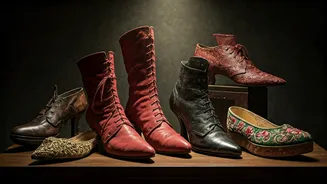
From Venice, let's journey to medieval Europe where footwear took a sharp turn towards the absurd with the advent of Crakows and Poulaines. These weren't just shoes; they were sculptures for the feet, characterized by incredibly long, exaggerated points. The Crakows, a subtype of poulaines, became notorious symbols of vanity, so impractical and socially disruptive that they even attracted official bans. The longer the point on a poulaine, the more it signified social rank, sometimes requiring external supports to keep the tips from dragging on the ground. This trend highlights a period where fashion prioritized ostentatious display and defiance of convention, even at the cost of basic functionality.
The Wide Shoe Era
Following the era of extreme points, European fashion veered dramatically in the opposite direction, ushering in the age of Duckbill shoes. These were the antithesis of pointy footwear, featuring a remarkably wide, square-toed silhouette that often appeared exaggerated and almost comical. This stylistic swing reflects a dynamic and ever-changing fashion landscape that could shift from one extreme to another. These unusually shaped shoes sometimes faced regulation, indicating their significant impact on societal perceptions and their potential to be seen as too outlandish for everyday wear. They represent a fascinating period of sartorial experimentation.
Practical Platforms & Mud Guards
Beyond the realm of high fashion and vanity, other historical footwear served more utilitarian purposes, albeit with unique designs. The Nalins, for instance, were high wooden platform sandals ingeniously employed in bathhouses to keep feet dry and elevated above damp floors. Some were even adorned with intricate decorations, adding an aesthetic touch to their functional design. Similarly, Pattens served as essential protective gear in medieval towns. These were bulky wooden overshoes worn atop regular footwear, designed to lift the wearer above the mud, grime, and filth of unsanitary streets. While offering crucial protection, they were notoriously awkward and cumbersome to navigate in.