






The Humble Salt Solution
In an age dominated by high-tech gadgets for home comfort, a surprisingly simple, age-old remedy is resurfacing and capturing attention online: the salt
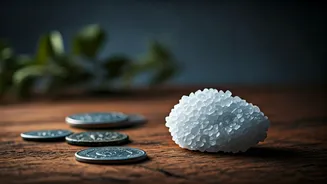
bowl trick for reducing room dampness. This method, often seen as a folk wisdom, proposes placing a bowl of salt in areas prone to moisture. The visible transformation of the salt – clumping, hardening, or even becoming damp itself – serves as a visual cue that something is indeed happening. This phenomenon isn't mere guesswork; it's rooted in the inherent chemical properties of salt, specifically its remarkable ability to attract and absorb water vapor directly from the surrounding atmosphere. This natural attraction makes it a passive yet potentially effective agent in combating excess humidity and improving the air quality within enclosed spaces without any need for electricity or complex machinery. The appeal lies in its simplicity, low cost, and the satisfying visual evidence of its action, making it an attractive option for those seeking sustainable and straightforward home solutions.
Hygroscopicity: Salt's Moisture Magic
The effectiveness of the salt bowl hack is primarily attributed to a well-understood scientific principle known as hygroscopicity. Salt, specifically sodium chloride, possesses this characteristic, meaning it has a natural affinity for water molecules in the air. Scientific studies examining salt's behavior in humid conditions have observed a spontaneous uptake of water, leading to a conversion from crystalline sodium chloride into liquid droplets. This active absorption process is precisely why a bowl of salt left in a damp environment gradually appears wet or clumped. Further research indicates that salt not only absorbs moisture but can also enhance the moisture-retaining capacity of surrounding materials. Experiments have shown that in higher humidity, salt amplifies the ability of substances to capture water, making it particularly effective in damp locations like basements or during periods of high atmospheric moisture, such as monsoons. This inherent property forms the scientific bedrock of the viral hack.
From Home Hack to High Tech
The principle that drives the humble salt bowl hack is so fundamental that it's being harnessed in sophisticated technological applications, particularly in the field of water harvesting. Scientists are exploring and utilizing salt-based materials for advanced environmental solutions, especially in arid regions. The mechanism involves the binding of water molecules into the salt's crystal lattice, which dictates its adsorption capacity. This means that, on a grander scale, salt is being employed to literally extract water from the air. The viral trend of placing a bowl of salt indoors for dehumidification mirrors this cutting-edge science, albeit on a much smaller, domestic level. It highlights how ancient home remedies can sometimes be a simplified manifestation of complex scientific processes, demonstrating the universal principles of moisture absorption and condensation that are being applied from our homes to advanced environmental engineering.
Effectiveness and Limitations
While the salt bowl method demonstrably works to a degree, it's crucial to understand its limitations. A bowl of salt can indeed absorb small quantities of excess moisture from the air, contributing to a reduction in musty odors and a subtle improvement in overall air comfort within enclosed spaces. However, it is not a comprehensive solution for significant dampness issues. It cannot replace the need for proper ventilation, the use of dedicated dehumidifiers for more substantial moisture control, or the repair of structural damp problems. Therefore, the salt bowl should be viewed as a supplementary, low-cost, passive helper rather than a primary solution. Its viral popularity stems from its immediate, visible impact and its alignment with a growing interest in simple, eco-friendly, and cost-effective home maintenance strategies. It offers an accessible, albeit limited, tool in the ongoing effort to manage household humidity.