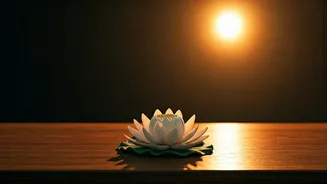








Prayer's Transformative Power
Prayer, far from being an act of withdrawal from reality, serves as a profound method of internal preparation. While it might not directly alter external
circumstances, its true efficacy lies in reshaping the individual's consciousness. This internal shift cultivates humility, enhances mental clarity, and instills a deep sense of courage. By engaging in prayer, individuals can face adversities with a strengthened inner resolve and a more compassionate outlook. This practice, deeply rooted in various spiritual traditions, acknowledges forces subtler than the tangible world, viewing prayer as an intentional and purified form of hope, a deliberate orientation of the self towards something greater than the immediate. Its impact on the human psyche, validated by modern scientific research, includes reduced stress, improved emotional regulation, and increased mental resilience, offering a crucial pause in our perpetually stimulating environment.
Inner Preparation, Not Escape
The essence of prayer lies not in altering external events but in fundamentally transforming the person who prays. Think of it as equipping yourself from within. When you engage in prayer, you might emerge facing the same challenges, but your internal landscape will have shifted significantly. The weight of a burden may persist, yet the individual carrying it will feel considerably stronger. Similarly, anger might not completely vanish, but its intensity is often softened, and anxieties, while perhaps not disappearing entirely, are viewed within a broader, more manageable perspective. This elevation in the quality of one's response to life's circumstances is where prayer's true power resides, often leading to profound changes in how one navigates life. This principle was well understood by ancient spiritual traditions, viewing prayer as a path to self-refinement rather than a mere negotiation with a higher power.
Spiritual Traditions and Prayer
Across diverse spiritual traditions, prayer has been recognized for its capacity to refine the individual's inner being. In the Jain tradition, for instance, prayer isn't conceptualized as a transactional exchange with a deity but rather as a disciplined process of self-improvement. The Bhagwati Sutra recounts a dialogue where Gautama Swami inquires from Lord Mahavir about the spiritual gains derived from 'vandana,' or reverential prayer. The response consistently emphasizes the cultivation of humility, the adherence to discipline, the fostering of reverence, and the gradual weakening of ego-driven inclinations that lead to karmic repercussions. This perspective underscores that prayer's primary function is not to appease or flatter the divine, but to purify and uplift the devotee, thereby enhancing their spiritual understanding and inner strength.
Collective Prayer's Impact
The power of prayer extends significantly when practiced collectively, fostering a shared moral consciousness and a deeper sense of interconnectedness among people. It serves as a potent reminder that humanity is not solely defined by political or economic structures but possesses a vital spiritual dimension. When large groups unite in prayer, they collectively affirm that peace is not merely a diplomatic objective but a fundamental duty towards civilization. This shared spiritual endeavor creates a powerful 'moral attention,' drawing focus to the common good and reinforcing shared values. Such collective expressions of faith can transcend religious observances, becoming national offerings of goodwill and solidarity in a world often marked by conflict and division, dedicating aspirations towards a more peaceful and compassionate existence for all.