




Navratri's Grand Arrival
Millions of devotees across India eagerly anticipate the arrival of Chaitra Navratri, a sacred nine-day period dedicated to devotion, spiritual renewal,
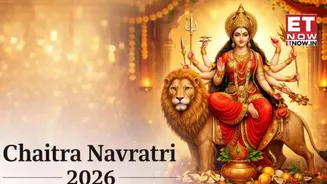
and fervent prayer during the spring season. In 2026, this auspicious festival commences on Thursday, March 19th, setting the stage for a period of intense spiritual practice and celebration. The festivities will extend for nine full days, drawing to a close on Friday, March 27th, which also marks the joyous occasion of Ram Navami, the commemoration of Lord Rama's birth. At its core, Chaitra Navratri is a profound observance primarily focused on venerating Goddess Durga and her nine divine manifestations, honouring her celestial power through a series of rituals, periods of fasting, vibrant colours, and deep meditative prayers.
Key Dates & New Year
Mark your calendars for Chaitra Navratri 2026, as it officially begins on Thursday, March 19th, and concludes on March 27th. This final day holds particular significance as it is celebrated as Ram Navami, the auspicious anniversary of Lord Rama's divine birth. Furthermore, Ram Navami also heralds the commencement of the Hindu lunar New Year, a time of fresh beginnings and spiritual reflection. The festival's start is precisely timed with the Pratipada tithi of the Shukla paksha within the month of Chaitra. The culmination of Chaitra Navratri with the celebration of Lord Rama's birth beautifully symbolizes the eternal victory of good over malevolent forces. Intriguingly, this period coincides with the celebration of other regional New Year festivals across India, including Ugadi in the southern states, Gudi Padwa in Maharashtra, Cheti Chand and Thapna in various other communities, and Navreh observed by Kashmiri Pandits.
The Sacred Ghatasthapana
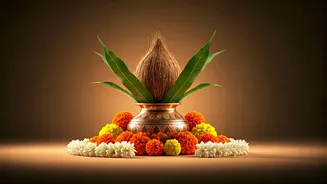
The nine-day devotional period of Navratri officially embarks with the sacred rite of Kalash Sthapana, more commonly known as Ghatasthapana, performed on the very first day. This pivotal ceremony is designed to invoke the divine presence of Goddess Durga, inviting her celestial energy into the hallowed space of one's home altar or temple sanctuary. For Chaitra Navratri 2026, the most auspicious time for this ritual, known as the Ghatasthapana muhurat, is scheduled for March 19th, spanning from 6:52 am to 7:43 am. An alternative auspicious period, the Abhijit muhurat, will also be available from 12:05 pm to 12:53 pm on the same day. During this ceremony, a Kalash, a sacred pot brimming with water, is carefully placed upon a bed of soil. Barley seeds are then sown into this soil, symbolizing prosperity and spiritual growth. The Kalash itself is adorned with a coconut and fresh mango leaves, traditional emblems of fertility and abundant blessings. As the nine days of Navratri unfold, the barley seeds begin to sprout, visually representing wealth and continuous spiritual development.
Nine Goddesses, Nine Forms
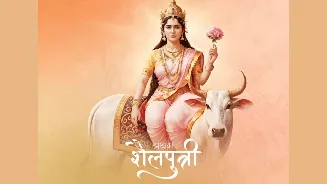
Each day of the Chaitra Navratri festival is dedicated to the worship of a specific form of Goddess Durga, collectively known as the Navadurga, or nine goddesses. These divine manifestations represent different aspects of feminine power and cosmic energy. The specific days are as follows: Day 1, March 19th, honours Maa Shailputri; Day 2, March 20th, is dedicated to Maa Brahmacharini; Day 3, March 21st, venerates Maa Chandraghanta; Day 4, March 22nd, focuses on Maa Kushmanda; Day 5, March 23rd, is for Maa Skandamata; Day 6, March 24th, pays homage to Maa Katyayani; Day 7, March 25th, celebrates Maa Kalaratri; Day 8, March 26th, is devoted to Maa Mahagauri; and finally, Day 9, March 27th, culminates with the worship of Maa Siddhidatri. The eighth and ninth days, Ashtami and Navami respectively, hold particular importance for the Kanya Pujan ceremony. During this deeply revered ritual, young girls, who are considered embodiments of the divine feminine, are offered food, gifts, and blessings, as they are worshipped as living avatars of the goddess herself.
Observances and Discipline
The festival's commencement is marked by the foundational ritual of Ghatasthapana, wherein devotees establish a sacred pot symbolizing the goddess's presence. A significant practice observed by many during these nine days is fasting, undertaken as a profound act of devotion. This fasting can range from consuming only fruits and specific permitted foods to adhering to a strictly regulated diet. Alongside fasting, daily prayers, devotional hymns known as aartis, and the chanting of sacred scriptures like the Durga Saptashati are integral parts of the observance, conducted both in homes and community temples. Beyond dietary restrictions and prayers, followers often adhere to additional customary rules. These typically include abstaining from non-vegetarian food, alcohol, and other intoxicating substances. Furthermore, ethical conduct is paramount, with an emphasis on refraining from arguments, negative speech, and any actions that could cause harm to others. The overarching aim of these disciplined practices is to foster inner purity, cultivate self-control, and promote mindfulness throughout the festival period.
Spiritual and Cultural Core
Chaitra Navratri carries immense spiritual and cultural weight, primarily representing the ultimate triumph of dharma (righteousness) over adharma (unrighteousness) and the definitive victory of good over all forms of evil. In alignment with the commencement of the Hindu New Year, known as Vikram Samvat 2083, the festival also serves as a powerful period for embracing new beginnings and setting positive intentions. Devotees utilize this time to engage in deep self-reflection, cultivate spiritual discipline, and dedicate themselves to their chosen deities and practices. It is fundamentally a time of profound spiritual rejuvenation and purification, offering a chance to cleanse the mind, body, and spirit, and to reconnect with one's inner self and the divine.