




Engagement Over Memorization
The landscape of early childhood education is undergoing a significant transformation. Parents are noticing that today's children, while not inherently
lacking in learning capacity, struggle with maintaining focus. The conversation has shifted from a narrow emphasis on memorizing facts and achieving predetermined outcomes to a more nuanced understanding of how children genuinely engage with information. In many households, learning is no longer confined to static desks and worksheets. Instead, it's unfolding through dynamic, tactile activities. Imagine a child not just reading about fractions, but actively measuring ingredients while baking a cake, or delving into the principles of engineering by constructing a cardboard city and pondering the stability of its bridges. These experiences are tangible, often delightfully messy, and far more compelling than passive instruction. This evolution is a direct response to the hyper-stimulating environment children navigate daily, from rapid digital content cycles to pervasive sensory input, where traditional instruction can easily fall by the wayside.
Active Participation Fuels Understanding
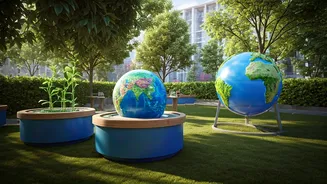
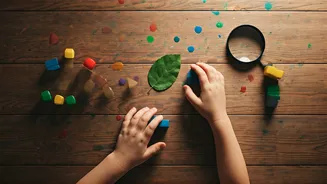
Experience-led learning fundamentally redefines the educational process by placing active participation at its very core. Rather than simply reading about a scientific concept in a textbook, children now grasp it through hands-on experimentation, such as mixing various colors to observe reactions or conducting simple home-based experiments. A geography lesson can transform into an outdoor excursion where children observe landscapes, understand cardinal directions, and estimate distances. This 'learning by doing' philosophy empowers children to internalize knowledge through direct involvement, making the learning process more robust and memorable than passive reception of information. This approach ensures that lessons aren't just heard, but deeply felt and understood through personal interaction with the subject matter.
Cultivating Essential Life Skills
This paradigm shift in early learning reflects a broader evolution in parental expectations. The focus is moving beyond mere school readiness to the cultivation of crucial life skills that are indispensable for navigating everyday life. Abilities such as fostering innate curiosity, enhancing communication prowess, developing robust problem-solving capabilities, and building self-assurance are now recognized as paramount. These vital attributes are not spontaneously acquired through rote repetition; they flourish organically through genuine interaction, enthusiastic exploration, and fearless experimentation. Parents are increasingly prioritizing these developmental milestones, understanding that a child's early years are foundational for building a resilient and adaptable individual.
Integrating Learning Into Life
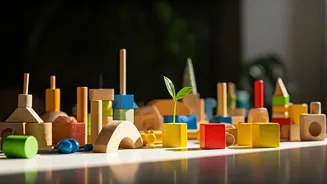
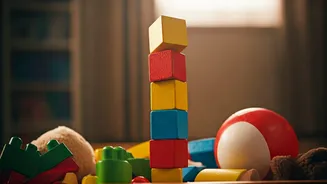
Modern parenting trends are also significantly influencing this educational direction. Many families are actively seeking a more balanced lifestyle amidst increasingly demanding schedules and extensive screen time. Consequently, there's a conscious decision to swap passive screen engagement for activities like constructing with building blocks, participating in storytelling games, or undertaking simple DIY projects at home. This philosophy extends to reimagining everyday routines as learning opportunities. A routine grocery trip can become an engaging counting exercise, the kitchen transforms into a practical laboratory for measurement and observation, and a visit to the park offers invaluable lessons in nature and physical coordination. Learning is no longer siloed into designated 'study times'; it's seamlessly woven into the fabric of daily life.
Redefining Achievement and Curiosity
A significant evolution is also occurring in how parents perceive and define success in their children's development. The yardstick is gradually shifting away from the quantity of information a child has memorized towards the quality of their thought processes. The critical question is no longer simply 'Did you arrive at the correct answer?' but rather 'How did you reach that conclusion?' Experience-led learning doesn't aim to replace traditional academic frameworks; instead, it complements them, lending depth and context through active participation. This approach makes classroom learning more tangible, relatable, and enduring. Furthermore, the inherent flexibility of this method is its greatest strength, accommodating diverse learning styles through drawing, building, conversation, or hands-on experimentation. The path of learning is open-ended, yet it remains purposeful, fostering an environment where curiosity is viewed as the spark for discovery, not its conclusion.