
Gold's Price Dynamics
The price of gold is significantly impacted by decisions from the Federal Reserve (Fed) and other global economic indicators. The anticipation of a Fed policy
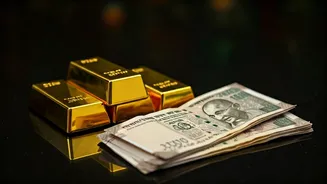
announcement and its subsequent release often leads to price volatility. In Delhi, gold prices dipped due to subdued demand from the local market, while globally, traders assessed the potential implications of the Fed's stance. This situation is further complicated by the fluctuating value of the Indian Rupee against the US Dollar, which influences the import costs of gold. The interplay between these factors determines the final market price, reflecting the sentiment of both Indian and international investors.
Rupee's Exchange Rate
The value of the Indian Rupee is directly influenced by the strength of the US Dollar and global economic conditions, including the Fed's monetary policies. The Rupee faced pressure, declining to 90.11 against the US Dollar and later trading at 90.09. This fluctuation can be attributed to several factors such as profit booking and foreign institutional investor (FII) outflows in the equity markets, and the overall global economic outlook. These movements impact import costs and affect investor confidence, adding complexity to the financial market dynamics in India.
Market Reactions Summarized
Both gold prices and the Indian Rupee’s exchange rate reflect the market’s response to the Fed's decisions and broader global economic dynamics. The prices of gold responded to both global anticipation and local demand while the Rupee's valuation was shaped by investor behavior and global economic forecasts. Therefore, it is important to understand the interconnectedness of international economic policies and domestic market reactions. A holistic assessment of both the precious metal's behavior and the currency's performance offers insights into how global economic strategies translate into Indian market dynamics.