
Amla's Winter Boost
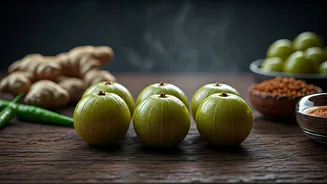
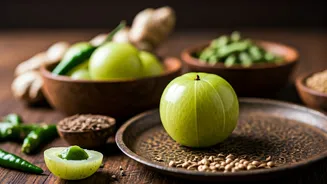
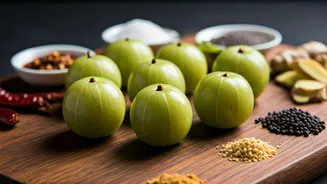
Amla, also known as the Indian gooseberry, is a nutritional powerhouse that shines particularly brightly during the winter months. This is when its health
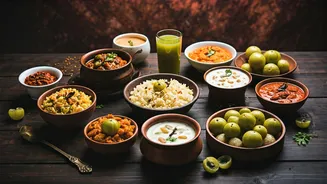
benefits are most needed. Packed with Vitamin C, antioxidants, and other vital nutrients, amla strengthens the immune system, combats seasonal illnesses, and enhances overall well-being. Consuming amla in winter aids in keeping the body warm, supports digestion, and improves skin health, making it an excellent addition to your diet. Given these benefits, it’s no surprise that amla features prominently in many traditional winter recipes. The next sections will delve into how you can include amla in your cooking.
Amla Murabba Magic
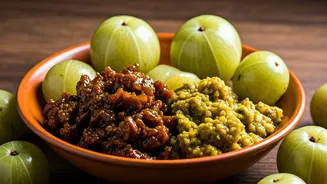
Amla Murabba is a classic Indian sweet that provides a burst of flavor and a dose of health. The recipe typically involves simmering whole amla fruits in a sugar syrup infused with spices like cardamom and saffron. This gentle process allows the amla to absorb the sweetness while retaining its unique tartness, resulting in a delightfully chewy texture. Beyond its taste, amla murabba aids in digestion and boosts immunity, making it an excellent winter treat. Enjoy it as a standalone dessert, or pair it with warm parathas for a satisfying breakfast or brunch. The preparation method can vary slightly from region to region, but the core essence remains the same – a sweet, tangy, and beneficial treat perfect for cold days.
Amla Juice Elixir
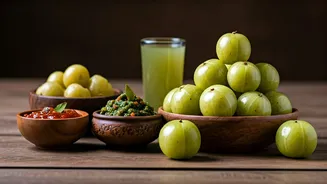
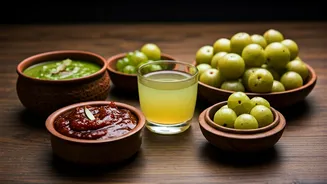
Amla juice stands as a refreshing and straightforward way to incorporate amla into your diet. This vibrant elixir is brimming with vitamins and antioxidants, offering a potent health boost. You can make it at home by blending fresh amla with water and perhaps a touch of honey or ginger to enhance the taste. Alternatively, many ready-made amla juice options are available in stores. Drinking amla juice regularly can boost immunity, improve digestion, and combat inflammation. It also contributes to healthier skin and hair, which is a significant bonus during the dry winter season. To make it more palatable, mix the juice with other fruits or vegetables like carrot or beetroot.
Amla Pickle Delights
Amla pickle brings a zesty and flavorful twist to your meals. These pickles can range from sweet and sour to spicy, depending on regional preferences and ingredients. Typically, the amla is preserved in a blend of spices, oil, and vinegar, allowing it to retain its tangy flavor while absorbing the spices' warmth. The pickle adds a burst of flavor to your meals and also offers the health benefits of amla, contributing to improved digestion and immunity. Amla pickles can be enjoyed alongside rice, roti, or paratha. They also enhance the flavor of lentil soups and vegetable dishes. Every bite delivers a taste of India's culinary heritage, adding zest and vibrancy to the winter months.
Amla Candy Crunch
Amla candy is a delightful and convenient way to enjoy the health benefits of amla. These candies can be made by preserving amla in sugar or jaggery, then drying them to create a chewy or crunchy treat. The process helps preserve the amla's natural goodness while adding a touch of sweetness. Amla candy is an excellent source of Vitamin C and antioxidants. It helps improve immunity and digestion. You can purchase them from most health food stores. They offer a tasty alternative to sugary snacks and provide a quick energy boost. It's an ideal choice for a post-meal treat or as a refreshing snack during the winter season. Children and adults alike will enjoy this healthy and flavorful treat.
Amla Chutney Bliss
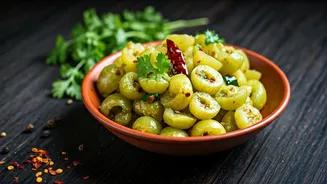
Amla chutney is a flavorful and versatile condiment that enhances the taste of any meal. Typically made from fresh amla, blended with green chilies, ginger, and spices, amla chutney provides a balance of tangy, spicy, and savory flavors. The chutney can be eaten with idli, dosa, rice, or paratha. The blend of ingredients not only enriches the taste of the dishes but also boosts your health. Amla chutney is rich in antioxidants and Vitamin C. It aids digestion and strengthens the immune system. Preparing amla chutney allows for culinary creativity, as you can adjust the spiciness and sweetness to match your preferences. In winter, this chutney provides warmth and a boost to your body's defenses.
Amla Curry Comfort
Amla can be incorporated into various curries, adding a unique tang and nutritional boost. The cooking process is often similar to other vegetable curries, where amla is combined with spices, vegetables, and a base of onions and tomatoes. This results in a flavorful and wholesome dish perfect for cold winter days. Including amla in curries provides an extra dose of Vitamin C and antioxidants. It aids digestion and strengthens the immune system. Amla curry can be eaten with rice, roti, or naan. It provides a warm, nutritious, and satisfying meal. You can customize the spice levels to your preference.
Amla and Spinach Soup
Amla and spinach soup is a nutritional powerhouse. This combination offers a hearty and healthy meal, perfect for the winter season. The preparation generally involves combining cooked amla, fresh spinach, and a blend of aromatic spices like ginger, garlic, and cumin, and then blended into a smooth and creamy texture. This soup is low in calories. It is rich in vitamins, minerals, and antioxidants, and it helps to strengthen immunity, improve digestion, and boost overall well-being. Amla and spinach soup provides a warm, filling, and flavorful experience, perfect for a cozy winter evening. You can also customize the soup with other vegetables like carrots or potatoes.
Amla in Winter Salad
Adding amla to salads gives a unique tang and a wealth of nutrients to your meal. You can slice or chop amla and mix it with other winter salad ingredients like carrots, beetroot, and leafy greens. The addition of a light vinaigrette dressing further enhances the flavor. This incorporation adds Vitamin C and antioxidants to your diet. The ingredients provide a satisfying, light, and healthy lunch. Amla salads offer a refreshing contrast to heavier winter meals while still providing a nutritional boost. Experiment with different dressings and ingredients to create unique and personalized winter salads.