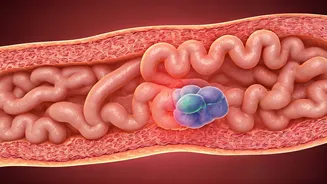




Gluten's Autoimmune Reaction
Celiac disease is a genetic predisposition that triggers an adverse autoimmune reaction when gluten, a protein found in wheat, barley, and rye, is consumed.
This immune overreaction mistakenly targets the small intestine, causing significant damage. The prevalence of celiac disease is relatively low, affecting approximately 1 in every 100 individuals globally. However, a concerning statistic is that only about 30% of those affected receive a proper diagnosis. When a person with celiac disease ingests gluten, their immune system activates to an extreme degree, which has a detrimental effect on the small intestine. Specifically, the villi, which are small, finger-like projections lining the small intestine responsible for nutrient absorption, become damaged. This damage impairs the body's ability to absorb essential nutrients from food, leading to various health issues.
Genetic Predisposition and Diagnosis
The occurrence of celiac disease is strongly influenced by an individual's genetic makeup. If you have a first-degree relative, such as a parent or sibling, who has been diagnosed with celiac disease, your risk of developing the condition increases significantly. The statistical likelihood for individuals with a close family history is approximately a 1 in 10 chance. It is crucial to distinguish celiac disease from gluten intolerance, as they are distinct conditions. While individuals with gluten intolerance may experience symptoms similar to those of celiac disease, their small intestines do not suffer the same kind of damage or impairment. This fundamental difference highlights the importance of accurate diagnosis, which often involves medical evaluation to confirm the presence of intestinal damage characteristic of celiac disease.