






Microwave's Nutrient Advantage
Microwave ovens work by agitating water molecules within food, leading to rapid cooking times with minimal added liquid. This speed is crucial because
shorter exposure to heat means less time for delicate, water-soluble vitamins like Vitamin C and B-vitamins to degrade. A notable 2025 study highlighted that microwaving outperformed other common methods, such as grilling and steaming, in retaining minerals in vegetables like zucchini. This gentler approach makes the microwave an excellent choice for preserving the nutritional integrity of many ingredients, especially those sensitive to prolonged heat exposure. It effectively minimizes nutrient loss, ensuring more of the food's natural benefits remain intact for consumption.
Air Fryer's Dual Impact
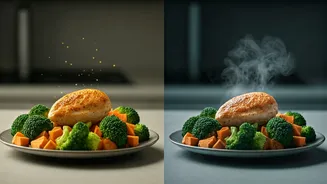
Air fryers create crispy textures by circulating hot air, allowing for reduced oil usage, which is a significant health benefit. While they cook faster than conventional ovens, potentially mitigating some nutrient loss compared to lengthy roasting, the dry, high heat can still impact certain nutrients. For instance, heat-sensitive vitamins like Vitamin C and folate may diminish if food is overcooked or becomes too dry. Research has indicated slightly higher Vitamin C losses in broccoli when air-fried compared to microwaved, often due to longer cooking durations. However, air frying can enhance the bioavailability of some antioxidants and fat-soluble vitamins, such as lycopene and beta-carotene in items like tomatoes and carrots, especially when a small amount of oil is used, making them more accessible for the body to absorb.
Choosing the Right Method
Deciding between an air fryer and a microwave for optimal nutrient retention isn't a one-size-fits-all answer; it truly depends on the specific food and nutrients you're focusing on. Microwaves shine when preserving water-soluble vitamins and minerals, particularly in vegetables cooked quickly with minimal water. They offer superior retention for ingredients like zucchini. On the other hand, air fryers excel when preparing foods that benefit from dry heat and crisping, such as root vegetables and peppers, potentially boosting the absorption of fat-soluble nutrients. If your aim is a healthier, less-oily crispy finish, the air fryer is a great option. Understanding these nuances allows for a more strategic approach to meal preparation, maximizing both health and flavour.
Best of Both Worlds
Ultimately, the most effective strategy for nutrient preservation and culinary enjoyment involves leveraging the unique strengths of both appliances. For delicate produce like leafy greens, quick microwave steaming is ideal, as it rapidly cooks vegetables while retaining essential water-soluble vitamins and minerals. Conversely, for achieving desirable textures like crispiness in items such as hearty vegetables or potatoes, and enhancing the availability of certain antioxidants, the air fryer proves highly beneficial. By incorporating both the microwave and the air fryer into your cooking repertoire, you can enjoy a diverse range of dishes that are both delicious and nutritionally superior, ensuring a balanced approach to healthy eating.