






A Botanical Discovery
The bougainvillea, often affectionately termed the 'paper flower' for its delicate appearance and vivid hues, boasts a history far richer than its common
beauty suggests. This plant serves as a living testament to the extensive global voyages undertaken in the 18th century. Its journey began when French botanist Philibert Commerçon first documented it in the verdant landscapes of Brazil. This significant finding occurred during a comprehensive expedition that was masterfully led by the renowned explorer Louis Antoine de Bougainville. This period was marked by intense scientific curiosity and a drive to catalogue the world's flora, making each discovery a crucial piece of a larger global puzzle. The plant's native habitat is firmly rooted in the warm climates of South America, specifically regions encompassing Brazil, Peru, and Argentina, where it naturally flourishes as a thorny vine or a robust shrub, adapting well to its environment.
Honouring an Explorer
It is a common misconception that the bougainvillea plant bears the name of the scientist who meticulously identified it. However, the honour of lending its name to this spectacular flora went instead to the expedition's leader, Louis Antoine de Bougainville. This naming convention highlights a fascinating aspect of the 18th century: the inseparable link between grand exploration and scientific advancement. Discoveries made on these voyages were often celebrated by immortalizing the commanders of these expeditions, underscoring the era's emphasis on leadership and the daring spirit of discovery. This practice cemented the plant's connection to a pivotal moment in maritime and botanical history, ensuring that the name Bougainville would be forever associated with its exotic beauty.
A Global Botanical Spread
By the dawn of the 19th century, the bougainvillea had embarked on its remarkable global migration, transitioning from its South American origins to European conservatories. Its subsequent dissemination across the world was largely facilitated by the extensive colonial networks and burgeoning trade routes that characterized the era. Botanical gardens played a pivotal role, acting as crucial hubs for acclimatizing and propagating new species. Through these established channels, the bougainvillea was introduced to diverse colonial territories, profoundly influencing horticultural landscapes. Its arrival in regions like India marked a significant expansion, transforming gardens and public spaces with its brilliant colours and resilient growth, becoming an integral part of the subcontinent's flora.
The True Nature of Blooms
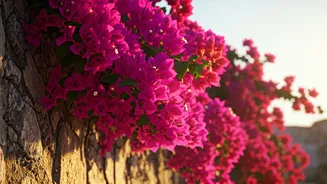
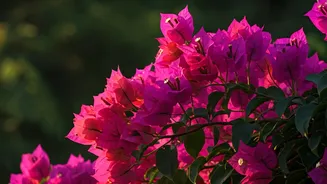
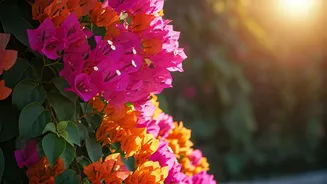
One of the most surprising and often overlooked characteristics of the bougainvillea is the true nature of its vibrant displays. What most people perceive as the plant's showy 'flowers' are, in reality, highly modified leaves known as bracts. These bracts are the structures responsible for the dazzling array of colours—ranging from vivid pinks and purples to fiery oranges and reds—that capture the eye. The actual flowers of the bougainvillea are quite small and inconspicuous, typically appearing in a delicate white hue. They are nestled discreetly within the centre of these colourful bracts, often hidden from casual view. This botanical nuance adds another layer of fascination to a plant already celebrated for its striking visual appeal and resilience.
A Garden Favourite Worldwide
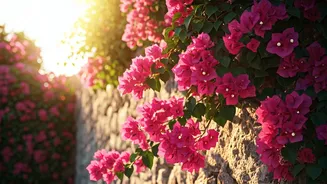
The bougainvillea's extraordinary journey from a South American native to a globally cherished garden plant is a testament to its exceptional adaptability and aesthetic appeal. Its renowned drought resistance makes it an ideal choice for arid and semi-arid regions, while its ability to thrive in challenging environmental conditions ensures its widespread success. These hardy attributes, combined with its consistently spectacular floral displays, have cemented its status as a beloved fixture in tropical and subtropical climates across the globe. In countries like India, where it flourishes with remarkable vigour, the bougainvillea has become an intrinsic part of the horticultural identity, adorning walls, trellises, and landscapes with its unparalleled vibrancy, earning its place as a truly favoured climber.