





The Rise of Ancient Snacks
A significant shift is occurring in how urban consumers approach snacking, with a strong move away from ultra-processed foods (UPFs) towards traditional,
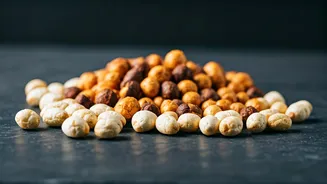
indigenous Indian snacks. Data from the 2025 Global Wellbeing Index indicates that approximately 68% of urban dwellers are actively seeking out these 'Indigenous Power Snacks,' a trend observed from bustling markets in London to sophisticated eateries in New Delhi. These natural offerings, including foxnuts (makhana), roasted chickpeas (chana), and pure honey, are replacing the once-dominant crisps and puffs. This movement is a fascinating intersection of ancient Ayurvedic principles and the modern imperative for metabolic health and cleaner eating. The global clean-eating wave has prominently featured ingredients like makhana, roasted chana, millets, and raw honey, often marketed with promising weight-loss attributes. The central question arises: are these foods inherently superior for weight management, or is it merely the repackaging of age-old wisdom with contemporary marketing strategies?
Natural Satiety Powerhouses
Indigenous snacks, at their essence, were never conceived as 'diet foods' but rather as fundamental, seasonal, and minimally processed staples. Dietician Nidhi Sahai emphasizes that the low caloric density of most indigenous foods stems from their simple preparation and absence of added fats, oils, sugars, or preservatives. Snacks like roasted makhana, boiled millets, or dry roasted chana are beneficial for weight management because they are simultaneously light and incredibly filling. Their substantial fiber content plays a crucial role in promoting satiety, thereby helping individuals avoid overconsumption. A 2025 report on Indian snacking patterns reveals that almost 60% of urban consumers are consciously gravitating towards these 'traditional' snacks to achieve cleaner eating habits, driven by a desire for familiarity coupled with genuine health advantages. While supermarkets now showcase varieties like peri peri makhana or masala-coated chana, often advertised as baked or natural, Sahai cautions that added ingredients like refined oils, artificial flavorings, excessive salt, and sugar can significantly inflate the calorie count. Even modest amounts of oil, coupled with hidden sugars in seasoning blends, can transform a potentially low-calorie snack into a calorie-dense indulgence.
Mindful Eating Pitfalls
The concept of overindulging in even nutrient-dense foods, often termed 'superfoods,' is a critical consideration. Traditional preparation methods for indigenous snacks typically involve portion control, such as a measured handful of roasted chana or a shared bowl of makhana. In contrast, packaged snacks are engineered for convenience and ease of consumption, often leading to mindless eating. Research from the 2026 Nutritional Behaviour Institute suggests that consumers tend to eat up to 35% more when a product is perceived as healthy, like those labeled 'baked' or made with 'ancient grains,' due to a reduced sense of guilt. Sahai highlights that packaged snacks encourage overeating because their convenience and enhanced taste can override the body's natural fullness signals. This subtle shift means individuals might start with the intention of a small portion but end up consuming the entire package, undermining potential weight management goals. It underscores the importance of awareness, even with seemingly healthy snack choices.
Raw Honey's Role
While foxnuts are a prominent indigenous snack, raw honey holds a special place as 'liquid gold.' Today's consumers are increasingly looking beyond standard supermarket honey towards more potent varieties like raw, monofloral honey. Mr. Arvind Patel, MD of Bharat Vedica, acknowledges that raw honey, including specific types such as Ajwain flower and Saffron honey, can complement a balanced lifestyle. However, he stresses that it should not be presented as a miraculous, standalone solution for fat loss. The primary value of raw honey, particularly Ajwain and Saffron varieties, lies in its minimal processing, which preserves beneficial natural enzymes. Patel explains that from a metabolic standpoint, its benefit arises from serving as a more natural alternative to refined sugars. Ultimately, its impact on weight management is heavily contingent on an individual's overall dietary habits and physical activity levels, rather than solely on the specific type of honey consumed.
Decoding Smart Labels
Navigating the supermarket for genuinely weight-loss-friendly indigenous snacks requires a 'Back-to-Basics' approach to label reading, as advised by Sahai for the 2026 consumer landscape. Look beyond superficial claims like 'baked' and scrutinize the total calories per serving, paying close attention to any hidden oils. The 'Ingredient Litmus Test' involves favoring products with shorter, simpler ingredient lists; if an ingredient is unpronounceable, it's likely not beneficial for the body. Be wary of the 'Multi-Serving Deception,' as a single bag often contains two or more servings, making it easy to miscalculate consumption. For individuals committed to weight loss, Sahai recommends a straightforward 'Indigenous Favourites' list: roasted makhana, roasted chana, boiled corn on the cob, sprouts chaat, and seasonal fruits. These options, rich in fiber, naturally promote satiety and support weight management goals effectively.