





The Yawn Phenomenon
Have you ever experienced that peculiar urge to yawn the moment you see someone else do it? This isn't merely a coincidence; it's a widespread human behavior
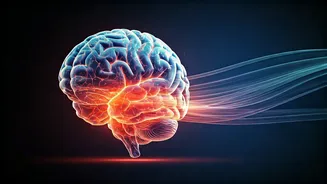
that scientists have been studying for years. Yawning, often associated with tiredness or boredom, takes on a new dimension when it begins to spread through a group. Imagine a classroom where one yawn quickly leads to another, or a family gathering where a chain of yawns unfolds. This intriguing phenomenon suggests a deeper mechanism at play than just feeling sleepy. While the exact biological triggers for a yawn—like oxygen levels or brain cooling—are still debated, the contagious aspect points towards a fascinating interplay between our individual physiological state and our social environment. It’s as if a yawn carries an invisible signal that resonates with those around us, prompting an almost automatic response.
Mirror Neurons at Play
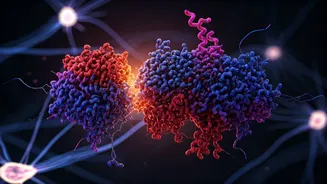
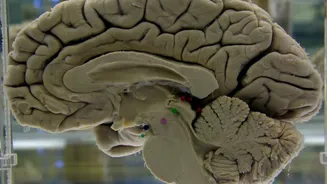
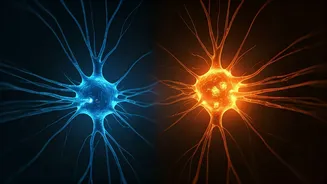
The secret behind why yawns jump from person to person lies in a remarkable feature of our brain: the 'mirror system,' powered by specialized cells called mirror neurons. These neurons fire not only when we perform an action ourselves but also when we observe someone else performing that same action. When you witness someone yawning, your mirror neurons become active, essentially mimicking the observed behavior. This neural echo makes your brain predisposed to replicating what it sees, whether it's a smile, a stretch, or, in this case, a yawn. This built-in mechanism facilitates learning by observation and contributes significantly to our ability to connect with others on a subconscious level. It's this rapid, often unnoticed, mirroring process that allows a single yawn to swiftly spread through a group, creating a ripple effect of drowsy movements.
Empathy and Social Bonds
Interestingly, contagious yawning isn't random; it often reveals the strength of our social connections. Research indicates that we are more susceptible to catching a yawn from individuals we know well—friends, family, or close colleagues—compared to strangers. This tendency is closely linked to empathy, our capacity to understand and share the feelings of others. When we feel connected to someone, our brains are more attuned to their cues, including involuntary actions like yawning. The mirror neurons associated with empathy are particularly active when observing familiar faces, making us more likely to mirror their actions. Therefore, a shared yawn can be seen as a subtle, yet powerful, indicator of closeness and mutual understanding within social groups, showcasing how our brains are wired to resonate with those we care about.
Across Species, Same Reflex
The phenomenon of contagious yawning is not exclusive to humans; it extends to the animal kingdom, providing further insight into its evolutionary significance. Scientists have observed this behavior in various species, including dogs, which may yawn after seeing their owners yawn, and chimpanzees, our close evolutionary relatives. The presence of contagious yawning in animals that live in social groups suggests a fundamental link to social bonding and group cohesion. Just as humans use this reflex to underscore their connections, it's believed that animals might use it to synchronize their behavior, strengthen their social ties, and communicate within their communities. This cross-species observation reinforces the idea that contagious yawning is an ancient, deeply ingrained instinct related to social interaction and mutual responsiveness.