



Strategic Garden Planning
Achieving a garden that showcases continuous floral beauty throughout the spring necessitates thoughtful planning and a diverse selection of plants. It's
not merely about planting spring-flowering bulbs, as these offer a limited bloom window. Instead, consider integrating annuals, perennials, bulbs, and flowering shrubs that complement each other and extend the visual appeal. Crucially, select plants that are well-suited to your specific growing zone and local climate, as this significantly boosts their chances of thriving. The timing for sowing seeds or transplanting seedlings is directly influenced by your region's average last frost date and prevailing spring temperatures. Understanding your soil's composition, pH level, and the sun exposure in different areas of your garden is also vital for selecting the most appropriate flora. For a more precise understanding of your soil, consider testing it or consulting with your local agricultural extension office. Furthermore, the flexibility offered by containers allows for the cultivation of a wider array of flowering plants and provides the ability to move them around to fill any gaps or refresh aesthetics as the season progresses, even bringing houseplants outdoors to contribute to the display.
Sowing Seeds for Success
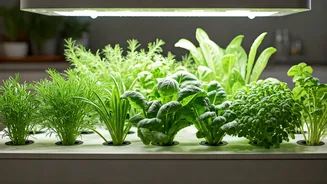
Embracing the practice of planting both annual and perennial seeds is an economical and rewarding approach to cultivating a vibrant garden. Numerous annual varieties, such as marigolds, zinnias, and cosmos, alongside perennials like Shasta daisies, coneflowers, and blanket flowers, are known for their rapid growth and ability to produce blooms from seed within their first season. The germination process for these seeds varies significantly; some require specific temperature ranges, while others benefit from a period of cold stratification. To maximize your success and encourage earlier blooming, it is highly recommended to research the specific needs of each seed variety. Starting seeds indoors under controlled conditions can provide a significant head start, allowing you to transplant robust seedlings into your garden when the conditions are optimal, thereby extending the period of vibrant floral display.
Understanding Bloom Windows
Every ornamental plant possesses a distinct flowering period, often referred to as its 'bloom window,' which is intrinsically linked to your local climate. Comprehending when this period begins, when it reaches its peak, and how long it lasts is fundamental to curating a garden with non-stop blooms. For instance, dahlias are highly valued for their extended bloom windows, typically starting in early July and continuing until the first frost arrives. Cannas also offer continuous flowering from early summer through to the season's end. Perennials form the structural core of many attractive flower gardens, and many provide extended bloom periods that commence in late spring and persist until the first frost. Once planted after the danger of frost has passed, salvias and coneflowers can begin flowering within a mere four to six weeks, offering blossoms throughout the summer. Annuals serve as excellent companions for extending the flowering season; wax begonias, impatiens, calibrachoa, and alyssum are particularly effective as filler plants, spreading to introduce color in pots, hanging baskets, and as ground cover. The portability of container plants means they can be repositioned to address bare patches or introduce new visual interest as the gardening season evolves.
Timed Planting Intervals
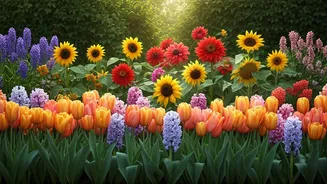
The art of creating a succession of blooms lies in strategically staggering the planting times of bulbs, seeds, perennials, and annuals. This approach ensures that as the flowers from one group begin to fade, new buds are already developing on the next, maintaining a continuous show of color. Consider interplanting daylilies, catmint, or geraniums amongst early-flowering bulbs, or scattering zinnia or cosmos seeds around them. Such combinations not only create a secondary bloom window but also effectively mask the fading foliage of the bulbs. Opting for perennials that exhibit slow growth patterns can minimize the need for frequent division, thus disturbing the planting area less often. Interspersing summer-blooming perennials like bee balm and yarrow with spring bloomers such as lupines and speedwell is another effective strategy. Spring is also an opportune time for dividing many types of perennials; divisions transplanted during this period often bloom later than the original parent plant. These spring divisions are invaluable for filling in any bare spots that appear as early-blooming flowers finish their cycle and the season advances.
Foundation Plants & Foliage
Incorporating flowering shrubs and small trees into your foundational landscape design provides essential height, structure, and serves as anchor points within your flowerbeds. While autumn is often considered the prime season for planting trees and shrubs, several varieties can be successfully planted in the spring. Although you might not witness blooms from these structural plants in their first year, investing in them now lays the groundwork for a garden rich with floral displays in subsequent springs, summers, and autumns. Notable flowering shrubs suitable for spring planting include lilacs, viburnums, forsythias, and smooth hydrangeas. For small flowering trees, consider redbuds, dogwoods, Star and Saucer magnolias, and Yoshino cherries. Beyond flowers, integrating foliage plants or those with visually interesting leaves after blooming significantly enhances garden appeal throughout the season. Hostas, caladiums, and coleus offer seasonal form and color, while plants like Jacob's ladder, wild ginger, and bloodroot contribute unique foliage. Ferns and ornamental grasses also add height, texture, and color, contributing to a well-rounded and visually dynamic garden.