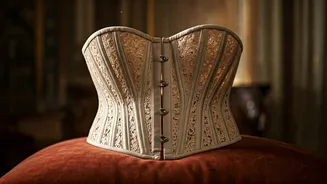

Origins in Europe
The corset's journey began in Europe, specifically in Spain and France, during the 16th century. These early versions, known as 'stays,' were crafted not
to accentuate curves, but rather to flatten the torso. This design was all about creating a rigid, cone-shaped silhouette. Corsets quickly became associated with royalty and nobility. They were not just undergarments, but symbols of social standing and discipline, defining elegance and posture for women within royal circles. This era saw corsets become essential to courtly attire.
The Victorian Era
The 19th century brought significant changes to corsets, particularly during the Victorian era. Corsets became more fitted and shaped to enhance the hourglass figure, the epitome of beauty at the time. Tight lacing became a popular, albeit controversial, practice. Women laced their corsets tightly to dramatically reduce their waist sizes, leading to debates about women's health and mobility. Doctors and reformers voiced their concerns about the impact of corsets on breathing and the movement of internal organs. This led to the dress reform movement, which advocated for more comfortable clothing and challenged the prevailing beauty standards of the time, sparking the initial decline of the corset.
Health Debates Emerge
As the 1800s progressed, a growing number of doctors and reformers raised serious concerns about corsets. Their primary critique focused on the detrimental effects of tight lacing on women's physical well-being. The restriction of breathing was a major issue, as were concerns about the displacement and compression of internal organs. These health concerns fueled the dress reform movement, which encouraged women to adopt more practical and comfortable clothing. This movement directly challenged the established beauty ideals, setting the stage for a shift in fashion and societal attitudes towards corsetry. This shift marked the beginning of corsets losing their prevalence.
Decline in the Early 20th
The early 20th century witnessed a gradual decline in the everyday use of corsets as women's roles and fashion preferences changed. World War I played a role in this shift, as women entered the workforce, and their clothing needs evolved. Changes in fashion also contributed, with looser styles becoming more fashionable. Furthermore, the rise of bras and girdles provided alternative forms of support and shaping, further reducing the reliance on corsets. These factors, combined with the changing societal landscape, led to a decline in their widespread use as a daily garment.
Corsets Today
Today, corsets have re-emerged in fashion, though in a vastly different context. They are no longer primarily undergarments meant for daily wear, but instead, they are often seen as outerwear and statement pieces. Modern corsets are embraced for self-expression, empowerment, and fashion experimentation. They represent a celebration of individuality and a rejection of the restrictive connotations of the past. The corset's journey continues as a dynamic element of fashion, constantly evolving to reflect and respond to cultural shifts. Corsets have gone from being a tool of restriction to a symbol of artistic flair.