

The Humble Plain Paratha
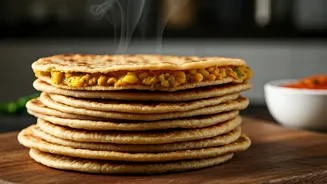
The foundational paratha, a simple yet universally loved flatbread, forms the bedrock of many Indian meals. Its beauty lies in its simplicity, crafted
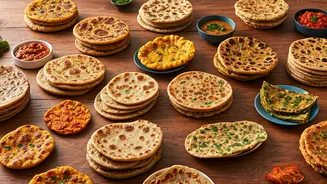
from whole wheat flour (atta), water, and a touch of salt, kneaded into a soft dough. The key to its delightful texture, a perfect balance of chewiness and subtle crispness, lies in the kneading process and the gentle rolling technique. A well-kneaded dough yields a pliable base that's easy to shape and cook. Rolling it into a perfect circle or a simple square, and then cooking it on a hot griddle (tawa) with a moderate amount of ghee or oil, allows it to puff up beautifully, creating delightful layers. The skill lies in achieving that even golden-brown hue on both sides, indicating it's cooked through and ready to be savored with a dollop of butter or your favorite curry. This basic paratha is incredibly versatile, serving as the ideal accompaniment to a wide array of Indian dishes, from simple lentil preparations to rich vegetable curries and even breakfast staples like yogurt and pickles.
Flavorful Stuffed Parathas
Elevate your paratha experience with a world of delectable fillings that transform this humble flatbread into a complete meal. Aloo paratha, arguably the most popular, features a spiced mashed potato filling, often seasoned with ginger, green chilies, cilantro, and a medley of aromatic spices like cumin, coriander, and garam masala. Paneer paratha offers a rich and creamy alternative, with crumbled or grated paneer mixed with finely chopped onions, herbs, and spices. Other beloved options include gobi (cauliflower) paratha, methi (fenugreek leaves) paratha, and even a sweet mawa (khoya) paratha for a delightful dessert-like treat. The art of stuffing involves carefully enclosing the filling within the rolled dough, ensuring no leaks, and then gently rolling it out again to avoid tearing. The cooking process is similar to plain parathas, but the added filling requires a bit more attention to ensure it cooks through evenly without burning the outer layer. These stuffed varieties are often served with yogurt, pickles, or chutneys, making for a satisfying and hearty meal.
Tips for Flaky Perfection
Achieving that coveted flaky texture in your parathas is an art that can be mastered with a few key techniques. Firstly, the consistency of your dough is paramount; it should be soft and pliable, neither too stiff nor too sticky. Kneading thoroughly for at least 5-7 minutes develops the gluten, which contributes to the chewiness and structure. When rolling out the dough, use minimal flour to prevent the paratha from becoming dry. For plain parathas, a simple folding technique, often involving folding the rolled disc into a triangle or a square and then re-rolling, helps create layers. For stuffed parathas, ensure the filling is evenly distributed and doesn't protrude. When cooking, use medium heat; too high a flame will burn the exterior before the inside is cooked, while too low a heat can make the paratha tough and oily. Don't be shy with the ghee or oil; brushing it generously on both sides during cooking is crucial for achieving a golden-brown crispness and that characteristic rich flavor. Pressing gently with your spatula while cooking also aids in even puffing and browning.