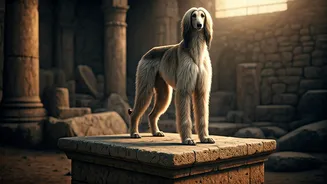







Afghan Hound's Grace
Hailing from the rugged, mountainous terrain of Afghanistan, the Afghan Hound stands as a testament to ancient breeding for specialized purposes. Its distinctive
long, flowing coat isn't just for show; it's an adaptation for protection against harsh environmental conditions. As one of the earliest known sighthounds, this breed was meticulously developed for its exceptional speed and keen eyesight, crucial for hunting prey across challenging landscapes. Its elegant stature and independent spirit reflect a lineage deeply intertwined with the historical demands of its origin region, offering a window into the specific needs that shaped early canine companions in Central Asia.
Akita Inu's Devotion
Representing unwavering loyalty in Japan, the Akita Inu boasts a heritage stretching back thousands of years. This robust breed was originally tasked with formidable duties, including guarding homes and undertaking the challenging hunt of large game. Its formidable strength, inherent courage, and profound devotion are hallmark traits that have been preserved through generations. The Akita Inu’s existence is a living chronicle of Japan's history, illustrating the profound bond between humans and canines and the essential roles these dogs fulfilled in ancient Japanese society, from protection to providing sustenance and companionship.
Basenji's Unique Voice
Emerging from the heart of Central Africa, the Basenji is uniquely celebrated as the 'barkless dog,' a distinction derived from its peculiar vocalizations, which are more akin to yodels or chortles than typical barks. This breed's intelligence and remarkable agility have been honed over centuries, with minimal changes to its ancestral characteristics. Traditionally employed as hunting partners in dense forest environments, the Basenji's innate curiosity and stealth made it an invaluable asset to its handlers. Its enduring, unadulterated form offers a direct link to the very early stages of canine domestication and the diverse environments in which dogs began to coexist with humans.
Chow Chow's Heritage
With its iconic lion-like mane and a striking blue-black tongue, the Chow Chow is an ancient breed with deep roots in China. This distinctive appearance belies a history of multifaceted utility. For centuries, the Chow Chow served not only as a vigilant guard dog, protecting property and people, but also as an adept hunter, capable of tracking and cornering prey. Furthermore, it functioned as a reliable working companion, contributing to the daily lives of its human families in various capacities. The breed's enduring physical traits and its historical roles provide a tangible connection to China's ancient cultural and societal structures.
Saluki's Royal Speed
Often cited as one of the most ancient dog breeds known to humankind, the Saluki's lineage traces back to the opulent civilizations of ancient Egypt and the broader Middle East. Renowned for its exquisite grace, exceptional speed, and remarkable endurance, this sighthound was highly prized by royalty. Its primary role was in the pursuit of game across vast desert landscapes, a task at which it excelled. The Saluki's esteemed status is further evidenced by its frequent depiction in ancient Egyptian artwork, solidifying its place as a breed that has graced human history for millennia, embodying elegance and hunting prowess.
Tibetan Mastiff's Vigilance
Originating from the formidable altitudes of the Himalayan region, the Tibetan Mastiff is a breed characterized by its imposing size and immense power. These dogs were historically indispensable to nomadic tribes, serving as formidable guardians of livestock against predators that roamed the harsh mountain territories. Its genetic makeup is considered exceptionally ancient and primitive, placing it among the earliest distinct lineages of domestic dogs. The Tibetan Mastiff's existence underscores the critical role that large, protective canines played in the survival and sustenance of early human communities in challenging environments.