







Why Downclimb Matters
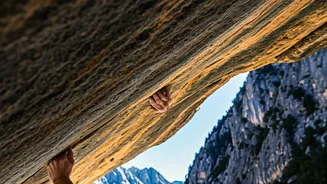
Downclimbing, though sometimes dismissed, is a skill that’s crucial for rock climbers and mountaineers. It's about more than just getting down; it is often
essential for backing off a challenging lead, navigating tricky descents, or even when you just fancy repeating a climb in reverse. Knowing how to downclimb safely is particularly valuable for trad climbers. Consider the era when climbing involved soloing up and down, where the ability to reverse your route was a fundamental safety measure. To improve the ability to downclimb, you need to understand the techniques and mental strategies to make it a safe and manageable process.
Find Your Center
Before starting your descent, it is crucial to establish your physical center. This involves identifying and achieving a Neutral Balance Point (NBP). The NBP is a comfortable position where your body is balanced. Both feet should be at a similar height, preventing gravity from pulling you off balance. This position allows you to rest and regain composure before beginning to downclimb, and should be established wherever possible. Finding the NBP on a climb means you can assess the situation, control your movements, and choose the best route for your descent.
Mental Preparation
The mind is your most valuable asset when downclimbing. Start by mentally preparing for the descent. First, alert your belayer with a clear, positive statement to indicate that you are about to downclimb. Next, analyze how you got into your current situation. Remember the initial move and visualize the sequence of holds ahead, paying close attention to the best grips. Will the downclimb be continuous, or are there points where you can rest? By visualizing each hold, you can anticipate the required movements and make informed decisions, reducing the likelihood of a fall. The mental aspect of downclimbing is just as crucial as the physical.
Master the Technique
Technique is crucial for a safe downclimb. On the way down, maintaining good footwork is just as important as on the ascent, and often easier. Since gravity is on your side, and your weight is committed, many footholds are viable. Look for smears and edges that may have seemed too small on the way up. Techniques like leverage, laybacks, and opposition holds are great for downclimbing. Also, using lowsteps (reverse highsteps) can be reliable as you lean out. Before reaching for the next hold, stabilize your position by finding an NBP, and then smoothly move one hand and then one foot at a time. This methodical approach will help you stay balanced and in control.
Body Positioning Tips
Body positioning can improve your downclimbing experience. Remember that lockoff (hands at chin height, elbows in) and lockout (straight arm, weight supported by the bone) positions consume the least muscle power. While you might need to compromise on these ideals sometimes, minimize time in half-cocked arm positions. Before leaning out to find the next hold from an NBP lockoff, try lowering to a lockout to extend your visual range, then return to a lockoff to gather yourself. This will help you conserve energy and maintain control throughout the descent. Visualize the transitions from balanced and upright to leaning out and balanced again.
Practice, Practice, More Practice
Practice is essential for mastering downclimbing. Indoor climbing offers a perfect environment to refine your skills. You can downclimb every route to improve coordination. You may find that holds look further away than they are. What appear to be big steps down are often manageable. Practice helps improve your perception and allows you to build confidence in your technique. The more you practice, the more comfortable and efficient you will become at downclimbing. Consistent practice builds muscle memory and helps you react intuitively in various climbing situations.
Handling Worst Case
Having an attentive belayer is essential during downclimbing. She needs to manage the rope while you descend, knowing you could fall. While she should carefully take in a few arm lengths of slack to reduce any potential fall, she could also lock the device off to avoid short-roping. If you're backcleaning on the way down as a leader, you can hang on a piece to recover physically or mentally. Consider the gear as expendable to improvise an anchor, offering a toprope for the downclimb or even a lower-off. Never backclean below a single piece unless absolutely necessary to downclimb from the one-point anchor. Always prioritize safety in such situations.