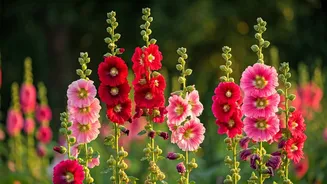







Hollyhocks: Garden Majesty
Hollyhocks, scientifically known as Alcea rosea, are celebrated for their impressive stature, often reaching heights of 6 to 8 feet, making them ideal
for creating vertical interest in any garden design. Their availability in a spectrum of captivating colours, including soft pinks, cheerful yellows, vibrant reds, and deep purples, ensures they can complement any aesthetic. As short-lived perennials or biennials, they are remarkably easy to cultivate from seed. Thriving in well-draining soil under full sun, hollyhocks are particularly well-suited for warmer climates. Their ability to produce a spectacular floral display throughout the summer months, a period when many other plants may struggle due to heat, makes them an invaluable addition for continuous colour and beauty.
Royal Garden Appeal
The allure of hollyhocks extends beyond their visual appeal; they have a long-standing association with charming cottage-style gardens, prized for their elegant height and captivating beauty. In smaller garden spaces, these towering blooms provide a sense of depth and dimension, making the area appear more lush and thoughtfully arranged. Beyond their aesthetic contribution, hollyhocks play a vital ecological role by attracting beneficial pollinators like bees, thus enhancing garden biodiversity. Incorporating hollyhocks bestows an immediate sense of sophistication and order upon a garden, evoking a refined, almost palatial ambiance. They prove that achieving a magnificent outdoor setting doesn't require excessive expenditure on landscaping; with minimal upkeep, they deliver height, colour, and charm throughout the summer.
Effortless Cultivation Guide
Growing your own hollyhock flowers at home is a straightforward process, achievable with a few key steps. Begin by sowing your seeds directly into the soil during the spring or early summer months. It is crucial to select a planting location that receives ample sunlight and benefits from good air circulation, as this helps to mitigate the risk of fungal diseases. When watering, aim for a moderate approach, ensuring the soil stays consistently moist but never waterlogged. Hollyhocks prefer slightly alkaline soil conditions for optimal growth. Proper spacing between plants is also essential to prevent overcrowding and reduce the likelihood of disease transmission. Additionally, consider staking the plants with a sturdy stick, particularly in windy areas, to provide support and prevent them from toppling over.
Ensuring Continuous Blooms
To prolong the vibrant floral display of your hollyhocks and encourage continuous blooming throughout the summer, a few simple care practices are highly effective. Regularly removing faded flowers, a process known as deadheading, signals the plant to produce more blooms. Hollyhocks can sometimes be susceptible to rust, a common fungal ailment. If rust appears, prompt removal of affected leaves is recommended. Enhancing air circulation around the plants is also a critical step in managing this disease. Furthermore, feeding your hollyhocks with a balanced fertilizer on a monthly basis can provide them with the necessary nutrients to maintain their vigour and prolific flowering.