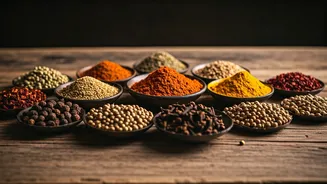

Spice Route Unveiled
The cornerstone of Indian cooking is its extensive spice palette. Spices are not just flavor enhancers; they are fundamental to the identity of each dish.
Turmeric, for example, is valued for its vibrant color and medicinal properties, contributing a warm, earthy flavor. Cumin, with its nutty and warm profile, often appears in the base of curries and stews. Coriander provides a fresh, citrusy note, complementing many savory dishes. Cardamom, cinnamon, cloves, and nutmeg contribute warmth and depth to both sweet and savory recipes. Red chilies provide the heat that Indian food is known for, with different varieties offering varying levels of intensity. These spices are carefully combined and used in different ratios, contributing to a complexity of flavor that is the essence of Indian food. Moreover, the freshness of these spices, whether whole or freshly ground, greatly enhances the overall taste experience, creating layers of aromatic notes in every bite.
Essential Cooking Techniques
Various cooking techniques are employed to realize the best possible flavors. The technique of tempering, or tadka, is fundamental. It involves heating oil or ghee and infusing it with spices, which releases their flavors before being added to a dish. Grinding spices, either by hand or with a mortar and pestle, is also key to releasing their full aromas and flavors. Another common technique is slow cooking, a method that allows flavors to meld, developing rich textures and tastes over time. The use of a tandoor, a cylindrical clay oven, is a crucial part of preparing items such as tandoori chicken and naan, imbuing them with a smoky flavor. The art of balancing flavors is critical, with chefs often using contrasting flavors – such as sweet, sour, and spicy – to create complex and balanced dishes. Mastering these techniques is the key to creating authentic Indian cuisine.
Regional Specialties Explored
India's culinary landscape is as diverse as its geography. North Indian cuisine, influenced by Mughal traditions, often features rich, creamy curries, breads like naan and roti, and dishes like butter chicken and biryani. In the east, the cuisine of Bengal is known for its use of fish, rice, and a combination of sweet and savory dishes, such as mishti doi (sweet yogurt). South India is famous for its use of rice, lentils, and a wide array of spices. Dishes like dosa, idli, and sambar are eaten everywhere. The west, with states like Maharashtra and Gujarat, is known for its diverse vegetarian dishes, use of seafood, and unique cooking styles. Each region has its unique flavor profiles and cooking methods, determined by local ingredients, climate, and cultural influences. From the fiery curries of the south to the milder dishes of the north, each region brings its unique character to the broader cuisine.
Cultural Significance of Food
Food plays a central role in Indian culture, representing much more than sustenance. It is often a key part of religious ceremonies, festivals, and celebrations. During festivals like Diwali and Holi, specific dishes are prepared and shared to symbolize prosperity, togetherness, and joy. Weddings and other important events are typically marked by elaborate feasts that often last for hours, reflecting hospitality and community. Many dishes have symbolic meanings; for instance, the use of turmeric in many dishes and rituals is viewed as auspicious and beneficial. Dietary restrictions also play a role, with many Indians adhering to vegetarian or vegan diets for religious or cultural reasons. The shared practice of eating together, often sitting on the floor and eating with one's hands, creates a strong sense of community and connection. Food is, thus, a central part of Indian cultural identity.
Evolution and Influence
Indian cuisine has evolved over centuries, with influences from various empires, trade routes, and cultures that have shaped its flavors and cooking techniques. The arrival of the Mughals, for example, brought with it the introduction of new spices and cooking methods. Trade with countries like Portugal and the Netherlands led to the introduction of ingredients like chilies and potatoes. The British colonial period also had a significant influence, introducing new concepts and dishes. In modern times, Indian food has spread globally, and become a popular and well-loved cuisine worldwide, with new variations and fusions emerging. Indian cuisine continues to adapt and change while preserving its traditional core. It is the reflection of a rich and dynamic history.