






Life on Mars
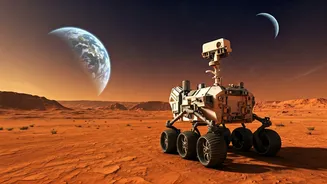
The foremost objective of the initial human missions to Mars should be to search for any signs of life. This is the consensus among experts, highlighting
a strategic shift in space exploration priorities. This reorientation underscores the immense scientific value of finding evidence of past or present life on the Red Planet. Furthermore, the emphasis on astrobiology also shapes mission planning and resource allocation. The search for life becomes a primary driver for selecting landing sites, designing experiments, and acquiring resources. These missions would be meticulously planned to preserve and analyze any potential biological samples. This strategic focus indicates a deeper understanding of the scientific and societal significance of potentially confirming life beyond Earth.
Sample Return Missions
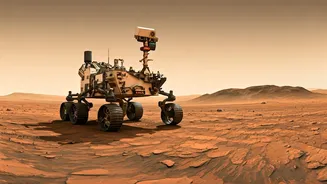
Returning samples from Mars to Earth is a critical priority, and the US must stay ahead of China in this race. The ability to bring Martian samples back for detailed analysis on Earth offers a huge advantage. It allows scientists to utilize advanced instruments and technologies not available on Mars. This will greatly enhance the ability to look for life's traces, including microscopic organisms or the signatures of past life forms. The US's strategic push to lead the sample-return mission underscores the importance of being the first to bring back samples. Such a mission could deliver a significant scientific breakthrough and solidify the nation's leadership in space exploration. These efforts require international collaboration and the deployment of advanced technologies.
The Space Race
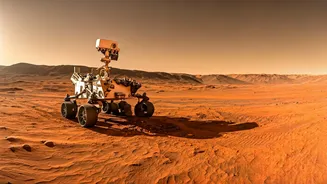
The US is competing with China in the pursuit of Martian samples and in the broader context of space exploration. China is actively working on its own missions aimed at gathering and analyzing samples from Mars. This creates a new space race, with both nations striving for the scientific prestige and technological advantages of being the first to achieve significant milestones. This competition fuels innovation, driving the rapid development of new space technologies and scientific approaches. Securing Mars samples first would be a major win for the US. The pressure of this competition is motivating both countries to invest heavily in their space programs, accelerating their capabilities and ambitions in space exploration.
Looking Ahead
Space exploration in 2026 is poised to be an eventful year. With the Artemis program aiming to send humans back to the Moon in 2026, space travel will be further advanced. The deployment of new telescopes and the continuation of robotic missions will add new knowledge. These initiatives should inspire and intrigue the public. They will also improve our understanding of the universe. In the future, the human race will be involved in interplanetary travel, and the exploration of other worlds like Mars will be prioritized. The upcoming missions will drive innovation and scientific discovery. They will also improve international cooperation in the world of space exploration.