





Myth: Hair Grows Thicker
A persistent myth suggests shaving makes hair grow back thicker and darker. However, this is scientifically inaccurate. Shaving merely cuts the hair at the skin's
surface, not affecting the root or follicle. When hair regrows, its blunt tip can create a stubbly sensation and an illusion of increased thickness or darkness. Studies confirm that shaving does not alter the hair follicle structure, growth rate, or pigmentation. The perceived change is purely a visual and tactile effect due to the blunt edge of the regrowing hair. Therefore, rest assured that your hair's natural color and thickness remain unchanged by the act of shaving itself. It's a matter of physics, not a magical transformation of your hair's inherent qualities.
Myth: Water Suffices
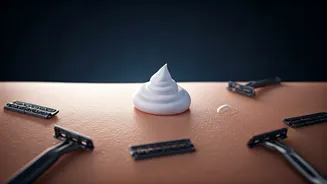
Many believe water alone is sufficient for shaving, but this can lead to significant skin irritation. Research highlights that using shaving lubricants, such as creams or gels, dramatically reduces friction, skin irritation, and micro-abrasions compared to shaving with water only. These shaving aids act as a protective cushion between your skin and the razor blade. They facilitate a smoother glide for the razor, effectively soften the hair, minimize friction, and help prevent painful nicks and razor burns. Thus, providing your skin with more than just a simple splash of water is crucial for a safe and comfortable shaving experience.
Myth: Infinite Razor Use
The idea that you can indefinitely use the same razor is detrimental to your skin. Dull blades significantly increase the likelihood of cuts, nicks, and skin irritation. For a smooth and safe shave, it is imperative to replace your razor or cartridge regularly. Fresh, sharp blades ensure a closer and cleaner shave while substantially reducing the chances of developing bothersome razor bumps. Holding onto an old, worn-out razor will ultimately lead to skin discomfort, so replacing it promptly will be greatly appreciated by your skin. Research supports that dull blades create more drag and uneven cutting, contributing to skin irritation and a higher prevalence of ingrown hairs.
Myth: Frequent Shaving Increases Growth
One of the most enduring myths is that shaving more often will accelerate hair growth. This assertion is unfounded. Scientific studies indicate that hair growth rate is primarily dictated by hormonal and genetic factors, not by external grooming practices like shaving. Your inherent biology, influenced by your hormones and genes, is the sole determinant of how quickly your hair grows. Therefore, you can shave as frequently as you desire without any impact on the speed at which your hair regrows. Your shaving schedule has no bearing on your hair's growth rate.
Myth: Shaving Causes Ingrowns
While shaving can contribute to ingrown hairs, it doesn't always cause them if performed correctly. Ingrown hairs are more a consequence of improper technique rather than the act of shaving itself. The key to prevention lies in using a clean, sharp razor and, crucially, shaving in the direction of hair growth. Adhering to these simple practices, along with a bit of attentive care, can significantly reduce the occurrence of ingrown hairs, leading to smoother, bump-free skin. Shaving can be an effective hair removal method when approached with the right technique and quality tools.