






Navigating the Network
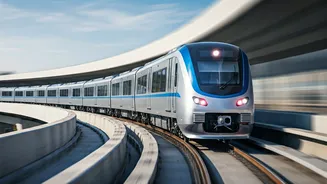
The Hyderabad Metro currently operates with three distinct lines: the Red, Blue, and Green. Each line serves a crucial role in connecting various parts
of the sprawling city, offering commuters a reliable and efficient mode of transport. The Red Line stretches from Miyapur to LB Nagar, covering a significant north-south axis and boasting 27 stations. It's a vital artery for daily commuters. The Blue Line, spanning from Nagole to Raidurg, is instrumental in linking the eastern and western IT corridors, featuring 23 stations and facilitating travel through bustling commercial hubs. Complementing these is the Green Line, which connects JBS Parade Ground to MG Bus Station, encompassing 15 stations and serving key areas in the northern and central parts of the city. Together, these lines form the backbone of Hyderabad's public transit system, with interchange stations at Ameerpet, Parade Grounds, and MGBS providing seamless transitions for passengers moving between different routes. The entire system is designed to be fully elevated, contributing to its efficiency and the reduction of surface traffic congestion. Recent operational data indicates a significant daily ridership, highlighting its importance in daily urban mobility.
Ticketing and Timings
Commuting on the Hyderabad Metro is made convenient through various ticketing options designed for both occasional and regular travelers. For single journeys, passengers can opt for contactless tokens, which are simple to purchase and use. For frequent travelers, contactless smart cards offer greater flexibility and value, including potential seasonal savings of up to 10%. These smart cards can be recharged in multiples of INR 50, with a mandatory minimum balance of INR 10. The metro system also embraces digital convenience, allowing users to utilize Google Wallets for e-tickets, accessible via RCS messages on Google Messages by simply typing 'Hi' to the official Hyderabad Metro Rail handle. Online recharges for smart cards are also available, typically in multiples of INR 100, through various mobile applications like GooglePay, PhonePe, TSavaari, and Rapido. If a smart card is lost or damaged, a new one must be purchased, although the remaining balance can usually be transferred. The metro operates daily from 6:00 AM to 11:15 PM, with trains running every 7 minutes during peak hours and every 8 minutes during non-peak times. The total journey time for a full Red Line trip is approximately 52 minutes, while the Blue Line takes about 53 minutes, and the Green Line route can be completed in roughly 16 minutes.
Green Initiatives and Facilities
The Hyderabad Metro is committed to environmental sustainability through its 'Green Metro' initiative, aiming for energy efficiency and reduced carbon footprint. Sustainable practices are integrated into its construction, utilizing innovative rolling stock designed to minimize CO2 emissions. Key environmental efforts include extensive solar energy production to meet operational power needs, rainwater harvesting systems at stations to conserve groundwater, and significant water recycling efforts, having already recycled approximately one hundred thousand liters. The metro also engages in tree plantation drives near depots and recycles substantial amounts of used paper, contributing to forest conservation. For cleaning and maintenance, eco-friendly chemicals are exclusively used. Passenger convenience is paramount, with user-friendly stations equipped with lifts, escalators, and facilities for differently-abled individuals. Amenities such as automatic ticket vending machines, accessible charging points, and even 'in-flight' entertainment options like movies and games are available on board. Additionally, the metro system actively works on enhancing pedestrian safety and accessibility through the construction of skywalks, connecting stations directly to malls and other important landmarks, further encouraging public transport usage.
Expansion Plans: Phase II & III
Hyderabad's urban mobility landscape is set for a significant transformation with ambitious plans for metro expansion under Phase II and Phase III. Phase II, targeted for completion within the next four years, will add approximately 76.4 km to the network with an estimated cost of INR 24,269 Crore. Key corridors under this phase include the crucial Nagole to Shamshabad Airport line (36.8 km), extensions from Raidurg to Kokapet and Neopolis (11.6 km), a route from MGBS to Chandrayangutta (7.5 km), and Miyapur to Patancheru (13.4 km). Further extensions will connect L.B. Nagar to Hayatnagar (7.1 km), JBS to Medchal (24.5 km), and JBS to Shamirpet (22 km), with a mix of elevated and underground sections. Phase III, already approved by the Telangana cabinet, represents a monumental leap, planning to add over 300 km to the network with an estimated cost of Rs 69,100 crore, targeted for completion by 2027. This phase will introduce 28 new metro stations and connect the historic Old City with IT hubs like HITEC City and Gachibowli. It includes a dedicated underground stretch beneath the Musi River and spurs to Rajiv Gandhi International Airport via Shamshabad, along with a loop around the University of Hyderabad. Funding for this massive undertaking will be a mix of state equity, Asian Development Bank loans, and public-private partnerships. These expansions are projected to drastically reduce commute times, foster urban growth, and enhance real estate values across the region.
Prohibited Items and Regulations
To ensure the safety and comfort of all passengers, the Hyderabad Metro has established clear guidelines regarding items that are not permitted on its premises. Carrying sharp objects, firearms, tools, explosives, flammable materials, or incapacitating chemicals is strictly prohibited. The metro also enforces regulations concerning pets, which are not allowed on board or within station areas. While the metro's 'liquor policy' permits passengers to bring up to two sealed bottles, open consumption or the presence of opened containers is not allowed within the metro system or its stations. Adhering to these regulations is crucial for maintaining a secure and pleasant travel environment for everyone. The metro operators actively monitor compliance to uphold these safety standards. For any queries or feedback, passengers can reach out via the official contact number or email, and office address provided by Hyderabad Metro Rail Limited.