





A Haven of Tranquility
Priyanka Chopra Jonas recently offered an intimate look into a sacred corner of her Los Angeles residence, a dedicated prayer and meditation space designed
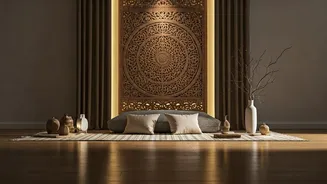
to cultivate peace. This sanctuary artfully fuses minimalist design principles with deeply rooted Indian spiritual traditions, creating an environment that feels both elegant and profoundly comforting. The careful selection of objects and the overall ambiance underscore the power of intentional interior design in fostering emotional stability and a sense of calm within the home. It's a testament to how personal spaces can serve as powerful anchors for mindfulness and reflection, especially in the midst of a busy life, demonstrating a thoughtful approach to creating a nurturing domestic atmosphere that supports mental and emotional well-being through thoughtful arrangement and symbolic resonance.
Sacred Elements Unveiled
At the heart of this peaceful retreat stands a striking white statue of Lord Shiva, captured in a serene meditative posture, embodying tranquility. This central piece is elegantly framed by a vibrant cascade of pink bougainvillea flowers, which introduce a natural splash of color and soft texture, enhancing the visual appeal of the sacred space. The atmosphere is further elevated by the gentle, warm luminescence of slender candles, casting a soothing glow that promotes a sense of introspection. Adjacent to the Shiva idol, a gleaming silver-toned Ganesha figure resides, symbolizing wisdom and new beginnings. The area is thoughtfully accessorized with brass incense holders and various ritualistic items, all meticulously arranged to enhance the sacred ambiance and contribute to the overall feeling of spiritual harmony and contemplative stillness. This deliberate curation of elements creates a deeply personal and evocative spiritual experience.
Design Philosophy Explained
The aesthetic principles evident in Priyanka Chopra's prayer corner echo the broader design narrative of her and Nick Jonas's Los Angeles home. The interior design predominantly features a serene white color palette, thoughtfully complemented by the introduction of earthy wooden accents. This combination of neutral tones and natural materials creates a balanced and warm environment, contributing to the overall sense of spaciousness and calm. This deliberate interplay between simplicity and warmth is key to establishing a sanctuary that feels both modern and deeply connected to natural elements. The design approach prioritizes creating a harmonious living space where visual order coexists with a profound sense of emotional comfort and personal connection, reflecting a sophisticated understanding of how environments impact well-being.
Mindful Spaces & Health
The presence of dedicated spiritual or mindfulness spaces within a home can profoundly influence emotional health, according to Sonal Khangarot, a licensed rehabilitation counselor and psychotherapist. Such areas act as vital emotional anchors, providing consistent touchpoints for reflection and grounding. Psychologically, humans thrive in environments associated with routine and calm. Even a small corner, imbued with calming objects, soft lighting, symbolic items, plants, or comfortable seating, can signal the brain to de-escalate and self-regulate. Repeated engagement in prayer, meditation, or quiet contemplation within this dedicated space fosters a strong mental association with stability and peace. In our hyper-stimulated modern lives, these sanctuaries offer essential pauses, enabling individuals to reconnect with their inner selves, thereby improving focus, reducing stress reactivity, and enhancing a sense of personal control, even amid uncertainty.
Balancing Minimalism and Culture
The appeal of homes that skillfully blend minimalism with personal and cultural elements stems from a desire for environments that are both visually organized and emotionally resonant. Khangarot explains that minimalism helps mitigate overstimulation and mental clutter, leading to a more regulated nervous system. However, excessively sterile or impersonal spaces can feel devoid of emotional depth over time. Conversely, incorporating personal objects—like family photos, heirlooms, books, traditional textiles, artwork, or spiritual symbols—instills a crucial sense of identity, belonging, and continuity. These elements serve as reminders of one's heritage and what provides emotional grounding. Environmental psychology supports the notion that spaces rich in personal meaning enhance comfort, emotional security, and resilience during challenging periods, proving that a truly restorative home is less about fleeting trends and more about creating a safe, connected, and emotionally supportive haven.