





Barringer Crater's Majesty
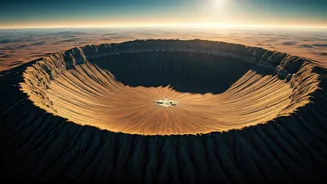
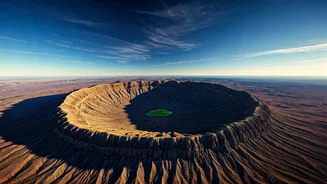
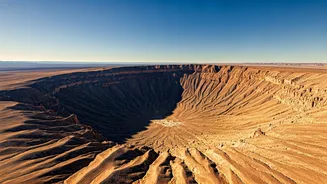
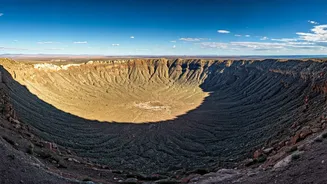
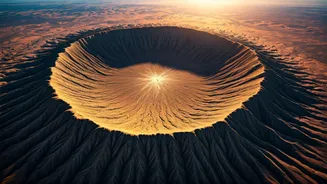
Nestled in the stark beauty of the Arizona desert, Barringer Crater stands as a remarkably preserved testament to a celestial visitor from approximately
50,000 years ago. Its sheer scale is awe-inspiring, inviting visitors to traverse its rim and truly grasp its vast dimensions. Adjacent to this natural wonder, a visitor center provides enriching insights through engaging space exhibits and displays of actual meteorite fragments, offering an unparalleled opportunity to witness the profound visual evidence of an extraterrestrial impact.
India's Lonar Lake
In the heart of Maharashtra, India, lies the extraordinary Lonar Crater Lake, a geological anomaly for its formation within basaltic rock, a rarity for impact sites. This event is estimated to have occurred around 50,000 years ago. What makes Lonar truly unique today is its peculiar water composition, exhibiting both saline and alkaline properties, fostering a distinctive ecosystem unlike any other. The surrounding environs are further enhanced by ancient temples and lush greenery, creating a serene atmosphere that complements its scientific intrigue.
South Africa's Vredefort
Boasting the distinction of being the largest known impact structure on our planet, Vredefort Crater in South Africa dates back over 2 billion years. While its original imposing form has been significantly reshaped by eons of erosion, the immensity of the site remains undeniable. Recognized by UNESCO as a World Heritage Site for its singular character, Vredefort offers explorers a chance to traverse its expansive landscape and observe geological formations that narrate the story of this ancient cosmic collision.
Canada's Pingualuit Crater
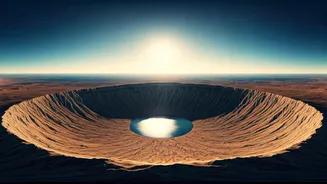
Remote and seemingly untouched, Pingualuit Crater in Canada captivates with its almost perfectly circular silhouette, a distinctive feature that sets it apart. The lake contained within its depths is renowned for its exceptional clarity and considerable depth. While reaching this secluded marvel requires dedication, the unparalleled scenery and profound sense of tranquility make the journey exceptionally rewarding. It offers a powerful reminder of the immense force unleashed during the meteor's impact.
Australia's Wolfe Creek
Wolfe Creek Crater in Australia presents a striking example where the original impact shape is remarkably discernible even after approximately 120,000 years. Visitors can explore the crater's rim or venture into its interior, experiencing its well-defined structure firsthand. This site also holds significant cultural importance for local Aboriginal communities, who possess traditional narratives explaining its formation. It serves as a compelling intersection of natural history and rich cultural heritage.