
Wind's Beneficial Role
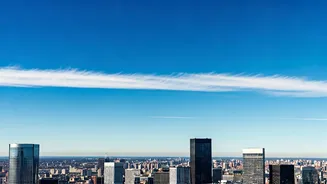
Recent observations reveal a noticeable enhancement in Delhi's air quality, a welcome change attributed primarily to the influence of strong surface winds.
These winds play a crucial role in dispersing pollutants that typically accumulate in the atmosphere, especially in urban environments with high population density and industrial activity. When wind speeds are robust, they effectively dilute the concentration of particulate matter and other harmful substances by carrying them away from the city's confines. This process leads to a reduction in the overall pollution levels, thereby improving air quality. The effect of strong winds is especially pronounced during certain times of the year, particularly when temperature inversions are less likely to trap pollutants close to the ground. The dynamics of these weather patterns therefore have significant implications for public health and environmental management strategies.
Prayagraj's Magh Mela
Alongside the discussion on air quality, it's worth noting the occurrence of the Magh Mela in Prayagraj. Devotees flocked in large numbers to participate in the first Snan of Magh Mela 2026. This significant event draws a massive crowd, reflecting a large-scale religious and cultural gathering. The Magh Mela is a period of spiritual importance, where people from across the country gather to take a holy dip in the sacred rivers. This cultural festival not only highlights the religious customs and beliefs of India but also serves as a reminder of the country’s rich heritage and traditions. Such events are vital to India's identity, and they often lead to an influx of pilgrims and visitors to the city.
Broader Context Review
The air quality improvements, coupled with the large gatherings at the Magh Mela, present a broader context of environmental dynamics and public activities. The interplay between weather patterns, pollution levels, and religious practices reveals the intricate connections within the local environment. Further analysis helps demonstrate how events such as wind patterns and religious festivals are intrinsically linked. Looking ahead, such observations highlight how environmental factors can impact public gatherings, and how environmental considerations such as air quality are becoming increasingly important. The connection between air quality and weather patterns underscores the need for sustainable practices and climate-conscious policies that prioritize the well-being of the population and the environment.