




What are Auroras?
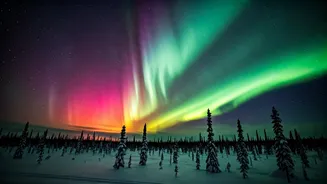
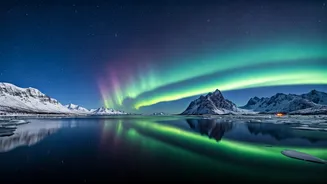
The Northern Lights, or aurora borealis, are spectacular displays of light in the sky, typically seen in the high-latitude regions around the Arctic. These
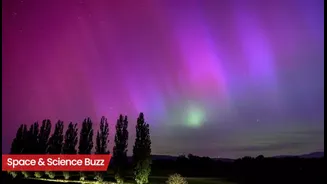
shimmering curtains of green, red, and purple are caused by charged particles from the sun colliding with gases in the Earth's atmosphere. These collisions excite the atmospheric gases, causing them to emit light. The color of the aurora depends on which gas is being excited and at what altitude the collisions occur. For instance, green is often produced by oxygen at lower altitudes, while red can be created by oxygen at higher altitudes, and blue or purple by nitrogen. Geomagnetic storms, triggered by solar flares and coronal mass ejections, can significantly enhance the intensity and visibility of auroras, extending their reach to lower latitudes.
Solar Activity Influence
The sun's activity plays a vital role in determining the intensity and frequency of auroras. Solar flares and coronal mass ejections (CMEs) send out massive bursts of energy and charged particles. When these particles reach Earth, they interact with the Earth's magnetic field, causing geomagnetic storms. These storms are the main drivers of auroral displays. During periods of high solar activity, like the peak of the solar cycle, auroras become more frequent and can be seen at lower latitudes. Space weather forecasts help predict solar activity and the likelihood of auroral displays. Scientists use data from satellites and ground-based instruments to monitor the sun and provide forecasts, which can help skywatchers plan their aurora viewing.
2026 Aurora Forecast
Predicting the aurora borealis, specifically for 2026, involves analyzing the ongoing solar cycle, as well as considering data from past observations and current space weather forecasts. While precise dates and times are challenging to pinpoint months in advance, general trends can be inferred. The anticipation of stronger auroras in 2026 is linked to the continued rise in solar activity, which could bring more frequent and vibrant displays. Key locations in India may have chances of viewing the northern lights during periods of high geomagnetic activity. Staying informed via space weather updates, along with checking forecasts from sources like the NOAA Space Weather Prediction Center, is very helpful.
Best Viewing Locations
While the auroras are most commonly seen in the Arctic regions, increased solar activity can make them visible in lower latitudes. The visibility depends on the strength of geomagnetic storms. The areas in India that have the best chance of viewing auroras are those with minimal light pollution and clear night skies. Away from the city lights is always best. During instances of intense solar activity, auroras have been seen at lower latitudes, which broadens the viewing possibilities for many, including those in India. Monitoring the aurora forecast can help one prepare and choose the most favorable locations. Furthermore, if the sky is clear and dark, the viewing experience is greatly enhanced.
Tips for Viewing
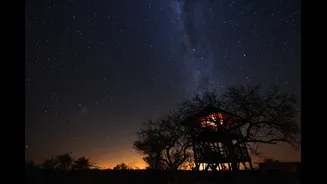
To increase the chances of witnessing an aurora, consider these useful tips. First, check the aurora forecast and space weather updates to see the predicted geomagnetic activity levels. Second, seek out a location with a dark, unobstructed view of the northern horizon, away from light pollution. Third, prepare to be patient, as auroras can be unpredictable, and may not appear immediately. Fourth, use a camera with a long exposure setting to capture the aurora's vibrant colors, as the human eye sometimes struggles to see the faintest lights. Consider using apps or websites that provide real-time aurora alerts, and inform you of changes in the sky conditions. Also, dressing warmly is essential since waiting for the aurora often means spending extended periods outdoors in cold weather.