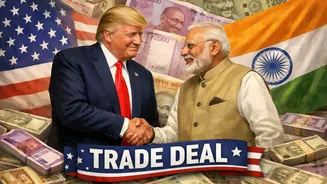








Deal Announcement's Impact
The recent confirmation of the India-US trade deal has ignited a wave of optimism, especially within the Indian financial markets. This agreement, which
includes significant tariff reductions, has been hailed as a positive step, immediately boosting market sentiment. Indicators such as the Nifty 50 and Sensex are expected to reflect this positive shift, which is already visible in the rapid rise of textile stocks, with some experiencing up to a 20% surge. This immediate positive response underscores the market’s anticipation of benefits stemming from enhanced trade relations between the two nations. The deal’s comprehensive scope aims at fostering economic growth and stability across various sectors, signalling a promising outlook for future trade and investment opportunities between India and the United States.
Sectoral Performance Review
Specific industries are poised to directly benefit from the India-US trade deal. Textile stocks, including companies like Kitex and Trident, have shown substantial gains, reflecting the anticipation of favorable trade conditions. Experts are actively analyzing which sectors and stocks are most likely to thrive in this new environment. The deal's effects extend beyond textiles, with analysts considering how changes in tariffs could affect sectors like jewellery, particularly companies such as Titan, Kalyan Jewellers, and Senco Gold, which have also seen an increase in stock values. Investors and analysts are actively looking for companies that can capitalize on this new trading environment, thus influencing trading decisions.
Market Analysis Insights
Market analysts and financial experts are offering critical insights into the India-US trade deal and its impacts. This analysis involves a deep dive into how the deal will affect the Indian stock market and what strategies investors should consider. Several experts have pinpointed specific stocks they believe are well-positioned for growth in light of these developments. The recommendations include a range of stocks that align with technical strengths, as some experts have shared lists to support investment decisions. This deep analysis assists in understanding the complex dynamics that might drive market performance. It provides investors with crucial tools for making educated decisions during this period of dynamic economic shifts and chances.
Tariff Dynamics Unpacked
The India-US trade agreement brings significant changes in tariffs, a pivotal element of the deal. Over the past year, the journey to this deal has been marked by different phases, including preliminary discussions and negotiations to settle trade-related issues. The announcement of an 18% reciprocal duty cut shows a collaborative approach towards reducing trade barriers. These tariff adjustments are intended to lower costs and encourage more trade between the two countries. The reduction in tariffs is considered vital for boosting sectors such as textiles and jewellery, which may now find increased accessibility to markets in both India and the United States. Such strategic realignment emphasizes the strategic commitment of both nations to facilitate trade and mutual economic benefit.
Broader Economic Implications
The trade deal between India and the United States carries broader implications beyond immediate market reactions. Experts evaluate how this agreement will affect India's economic growth and stability. The deal aims to remove overhangs of tariffs and improve trade relations, which could attract investments and boost economic cooperation. The focus on economic expansion is supported by other domestic policies, as highlighted in the latest budget, that aim to enhance infrastructure, tourism, and job creation. This multifaceted approach is expected to make India more competitive and draw in foreign investments, thus ensuring long-term sustainable growth. These measures aim to support diverse sectors and create an all-inclusive framework for economic prosperity.