


Royal Threads Begin
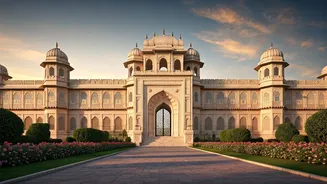
The Nehru jacket's lineage can be traced back to the esteemed Achkan, a distinguished long coat traditionally favored by Indian royalty and the aristocracy.
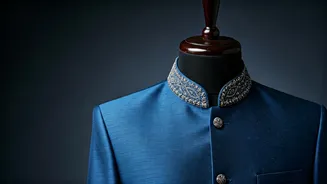
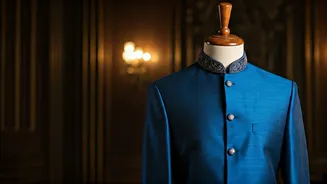
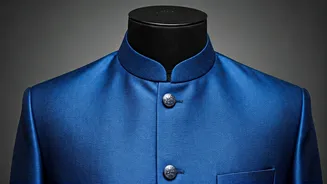
This garment was characterized by its high, upright collar and a precisely tailored silhouette, signifying elevated social standing and an inherent sense of sophistication. It was more than just attire; it was a visual representation of power and refinement within the royal courts. The inherent elegance and structured design of the Achkan laid the groundwork for the jacket that would later captify the world, embedding a sense of regality into its very fabric and form, making it a precursor to a garment that would eventually transcend its noble origins.
A Pre-Independence Statement
In the period leading up to India's independence, this garment, then often referred to as the bandhgala coat or prince coat, emerged as a significant marker of the burgeoning modern Indian identity. It represented a thoughtful fusion of deeply rooted Indian sartorial traditions with understated Western tailoring influences. This blend signaled a forward-looking yet distinctly Indian perspective. It was adopted by intellectual and political elites, becoming a symbol of a new, progressive India that was both proud of its heritage and open to global trends. The jacket's refined appearance and comfortable fit made it an ideal choice for those shaping the nation's future, embodying a sophisticated nationalism.
Nehru's Enduring Influence
While India's first Prime Minister, Jawaharlal Nehru, personally favored the more traditional and longer achkan, his distinctive high-collared attire inadvertently propelled the shorter jacket into widespread popularity. It was his signature style, particularly the erect collar, that became so iconic. As a result, the garment became popularly associated with him and, over time, acquired the now-ubiquitous name 'Nehru jacket.' This association cemented its place in sartorial history, transforming a garment with royal and pre-independence roots into a universally recognized symbol, intrinsically linked to one of India's most prominent leaders and his visionary outlook.
Fabric of Freedom
The Nehru jacket's significance deepened when it was frequently crafted from khadi, a hand-spun and hand-woven fabric deeply intertwined with India's struggle for independence. This choice of material imbued the jacket with profound symbolism, representing self-reliance, nationalistic fervor, and a powerful assertion of cultural pride. Wearing a khadi Nehru jacket was a visible statement of solidarity with the freedom movement and a rejection of foreign goods. It transformed the jacket from a mere piece of clothing into a potent emblem of India's collective aspirations and its journey towards self-determination, embodying the spirit of indigenous craftsmanship and national resilience.
Global Style Sensation
The 1960s marked a pivotal moment when the Nehru jacket transcended its Indian origins to become a global fashion phenomenon. Western fashion designers and influential celebrities discovered its unique appeal, incorporating it into their wardrobes and showcasing it on international stages. This infusion into global fashion trends transformed the Nehru jacket into a widely recognized and desired style statement, far beyond India's borders. Its structured silhouette, elegant collar, and the aura of exoticism it carried resonated with a generation seeking new forms of expression, solidifying its status as an international sartorial icon.
Modern Adaptations Today
In contemporary fashion, the Nehru jacket continues to thrive as a remarkably versatile and stylish wardrobe essential. Designers are constantly innovating, experimenting with a wide array of luxurious fabrics such as shimmering silk, breathable linen, and intricately patterned brocade. These modern interpretations honor the jacket's traditional roots while embracing current design sensibilities, making it suitable for a diverse range of occasions, from grand weddings to more casual everyday wear. The jacket’s enduring appeal lies in its ability to bridge the gap between heritage and modernity, offering a sophisticated yet accessible style option for a global audience.