

Peasant Origins & Oven Tests
Flammekueche, often referred to as a peasant dish, originated with farmers in the Kochersberg region near Strasbourg. Its primary purpose was to gauge
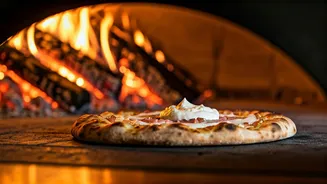
the precise heat of wood-fired ovens. Bakers would stretch a very thin dough, traditionally yeast-free, and top it with readily available ingredients like leftover cream or fromage blanc, onions, and lardons. This simple creation was then swiftly baked in the intense heat of the oven, emerging with a crisp, slightly charred crust. Daniel Vierling, president of the Brotherhood of True Flammekueche, emphasizes the importance of high-quality, locally sourced ingredients and authentic wood-fired cooking, with only about 40 restaurants worldwide adhering to these orthodox methods, predominantly in the Alsace region. The visual spectacle of the flames licking the edges of the dough, creating bubbling and charring, is an integral part of the experience.
The Alsace Obsession
While Flammekueche has been served by local innkeepers since the 1800s, its widespread popularity truly surged in the 1960s, coinciding with the rise of pizzerias. However, it’s crucial to distinguish it from pizza; Flammekueche boasts an exceptionally thin, often yeast-free dough and a curated selection of traditional toppings. Alsace, a region with a history of shifting between French and German control, has developed a particular passion for this dish. Daniel Vierling, a staunch advocate for authenticity, advises seeking out simple, family-run taverns rather than fancy establishments, noting that the presence of wood smoke and a diverse age range of diners are good indicators of a quality Flammekueche. He warns against electrically cooked versions, which he likens to having the texture of jellyfish, preferring the crispness achieved only through wood fire. The result is a delightful combination of salty, creamy, and smoky flavors, with a satisfying crunch.
Modern Takes & Sweet Surprises
Beyond its traditional savory profile, Flammekueche also embraces sweet variations. At Le Tigre, a lively brewpub in Strasbourg known for its vibrant atmosphere and craft beers, Geoffroy Lebold offers a unique take on the classic. While maintaining the essence of the dish, his recipe incorporates the brewery's own blonde beer into the dough and features a special house-made fromage blanc sauce. This dish holds deep nostalgic significance for Geoffroy, evoking childhood memories of family dinners. He recommends starting with the traditional onion, cream, and lardon version, followed by a delightful dessert Flammekueche. This sweet iteration features apples and cinnamon, often flambéed with Calvados, offering a comforting contrast with its warm fruit, spice, and an exceptionally thick layer of cream, reminiscent of a rich apple tart.
A Gastronomic Journey
Venturing beyond Strasbourg, the Alsace Wine Route reveals more culinary gems. In the medieval village of Kaysersberg, Flamme & Co, initially conceived by a double-Michelin-starred chef and now managed by new partners, presents a modern tasting menu of wood-fired Flammekueche. They aim to elevate the tarte flambée into an original gastronomic experience, offering inventive interpretations alongside traditional options. Their six-course menu includes unique creations like a salmon, dill, and lemon version, a rib-eye steak with parmesan and herbs, and a duck and butternut squash variant with a raspberry sauce. This innovative approach showcases a symphony of complex flavors, a departure from the dish's typically pork-centric origins. Further explorations led to indulging in a gooey Munster cheese Flammekueche in Ribeauvillé and enjoying punchy, red onion-topped tarts at an old-school wine tavern in Traenheim.
Generational Recipes & Hyperlocal Flavors
In the Kochersberg region, at the 17th-century farmhouse restaurant L’Aigle in Pfulgriesheim, the Roth-Doerr family, now in their fifth generation, continues the tradition of Alsatian home cooking. Here, Flammekueche is a specialty prepared using original family recipes, with an unwavering commitment to hyperlocal ingredients, sourced from within a few miles. The restaurant itself features a stone oven estimated to be around 300 years old, contributing to the authentic preparation. Antoine Doerr, a fifth-generation family member, highlights a particularly creamy version, generously topped with bacon and sweet onion, finished with Emmental cheese. This rendition is celebrated for its remarkable creaminess, thick lardons, and the distinct texture retained despite its richness, offering a hearty and rustic meal that satisfies deeply.